Teeswork South Bank Watercourse
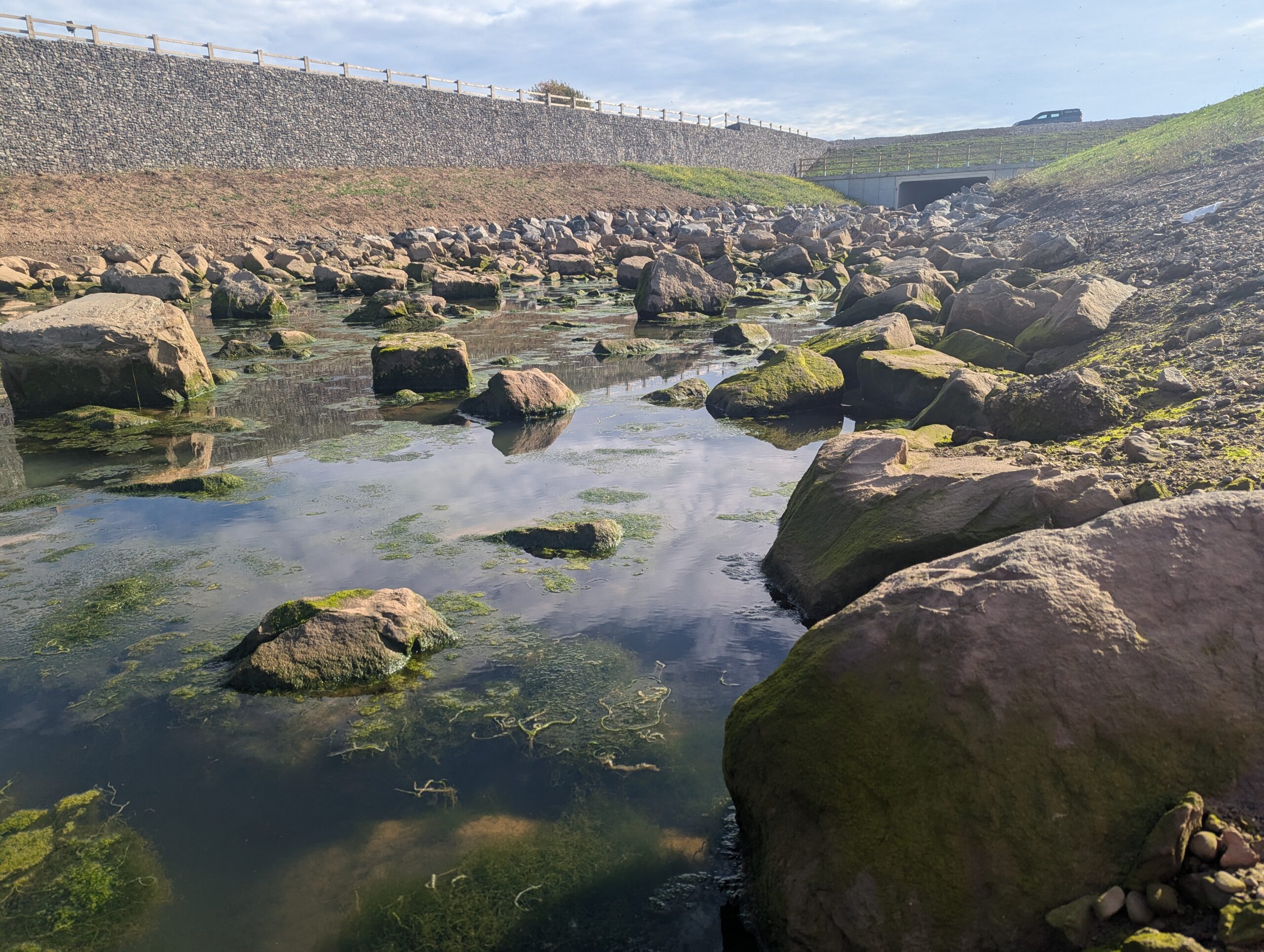
The JBA-designed South Bank Watercourse forms the strategic drainage backbone for more than 90 acres of advanced manufacturing land at Teesworks, the UK’s largest freeport and industrial zone. Combining engineering, ecology, and sustainability expertise, we designed a hybrid engineered channel to replace historic culverted becks, creating a new blue-green corridor that improves water quality, helps manage flood risk, and creates new habitats.

Teeswork South Bank Watercourse
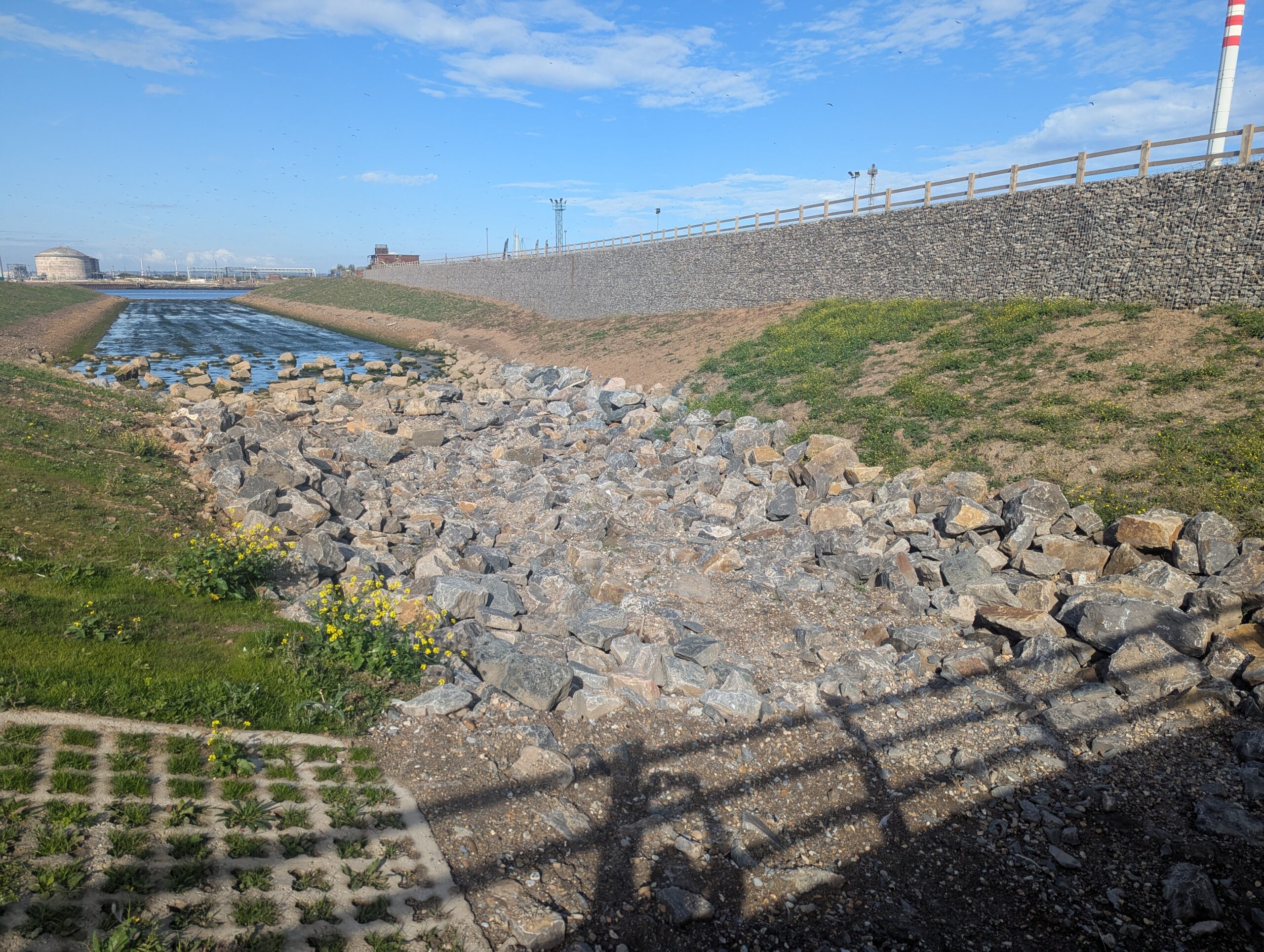
The JBA-designed South Bank Watercourse forms the strategic drainage backbone for more than 90 acres of advanced manufacturing land at Teesworks, the UK’s largest freeport and industrial zone. Combining engineering, ecology and sustainability expertise, we designed a hybrid engineered channel to replace historic culverted becks, creating a new blue-green corridor that improves water quality, helps to manage flood risk and creates new habitats.
Located on the banks of the River Tees and covering approximately 4,500 acres, Teesworks is the largest brownfield regeneration programme in Europe. To the west of the industrial zone, the newly created South Bank watercourse stretches approximately 1.9km, enabling water to flow across the site before draining into the River Tees.
- Client South Tees Development Corporation
- Location Redcar, Teeside
- Project
partners Halls Construction Services, ZTL Contracting
Nature-based regeneration enabled by innovative design solutions and sustainable ground engineering
The areas of South Bank and Dorman Point formed a key part of brownfield regeneration plans at Teesworks. Unlocking development at these sites required building a new channel and diverting two existing becks to capture surface water run-off and allow developments to drain into the River Tees. As the existing watercourses were polluted, hidden from sight and devoid of wildlife, this also represented a significant opportunity to embed environmental thinking at the heart of the regeneration and improve biodiversity.
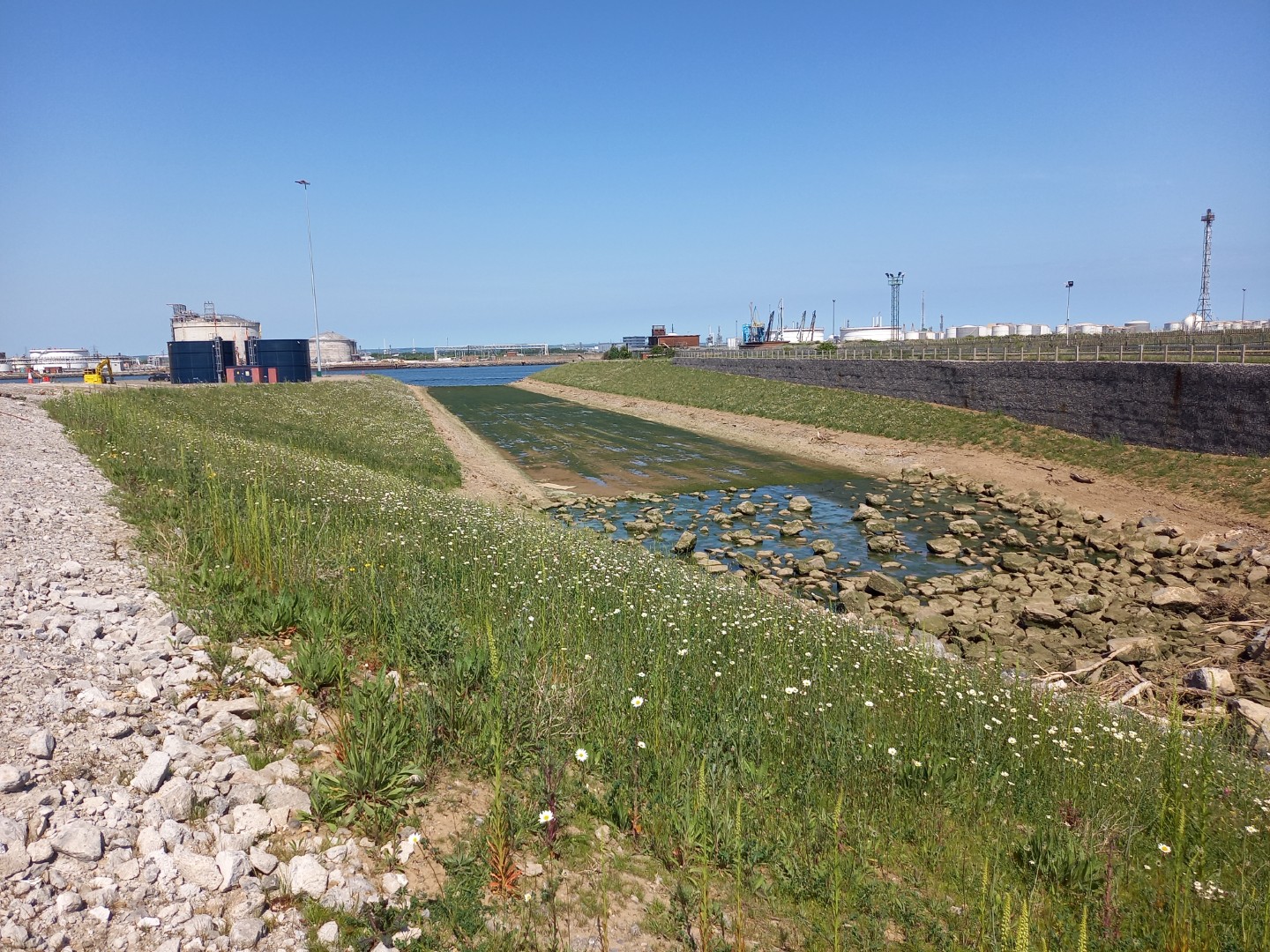
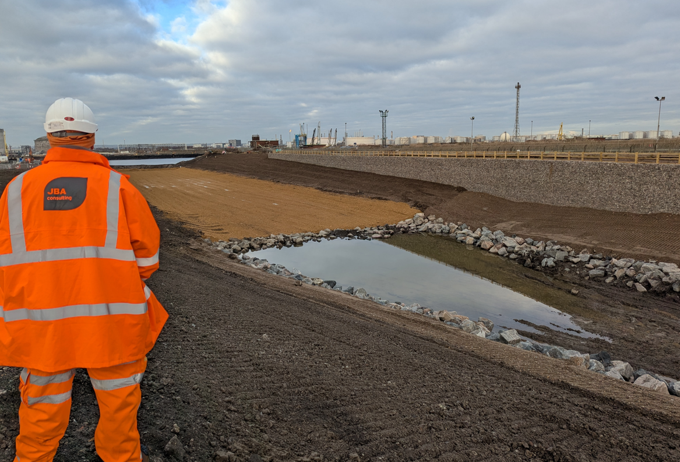
Guided by the aim of delivering long-term resilience, we designed the new 1.9km long channel as a passive, low-maintenance system that would mimic the natural stream and, if required, convey significant flood flows. To create new aquatic habitats and form a green corridor for the existing becks to flow across the site, our designs for the largely open channel also incorporated a gravel bed, carefully landscaped banks and a 'close to nature' style rock ramp. Together, these features will create up to one hectare of intertidal salt marsh habitat, slow the flow, trap sediment and improve fish passage.
Construction of the hybrid engineered open channel saw close collaboration between our sustainability, ecology and engineering teams to support the regeneration project's construction partners. Due to the nature of the site, this included developing innovative engineering solutions, such as gabion baskets to form the channel. By creating a manmade valley, this solution connected the existing low-lying streams and supported the project's sustainability objectives by using recycled, site-won aggregates.
Another key design consideration was ensuring the watercourse could continue where road and infrastructure crossings were necessary. To allow the stream bed to continue, such sections were designed and constructed using partially buried large concrete culverts. As a result, the stream bed can pass through the structures, maintaining and linking habitats. The final section of the channel was also designed with the future port and shipping in mind, further demonstrating how integrated thinking can unlock positive environmental outcomes at scale, while enabling regeneration of complex industrial land.

The Teesworks South Bank Watercourse project won the 'Sustainability' award at the Constructing Excellence North East Awards 2026 and the 'Best Use of Sustainable Solutions' award at the Ground Engineering GeoTech Awards 2026. The project has also been shortlisted for a national Constructing Excellence National Award and a CIRIA Biodiversity Challenge award.
Adopting a circular economy approach to reduce carbon
A defining feature of our work on the South Bank Watercourse was climate-resilient design and a circular economy approach. Underpinned by careful material management, the watercourse design evolved to maximise the resources available within the Teesworks site. This included reusing more than 100,000 m³ of site‑won steel slag within the channel's retaining structures, 12,000 m³ of clay used as part of the channel lining and 4,000 m³ of topsoil used for landscaping works.
Not only did this reduce the use of primary aggregates, but it also eliminated the need for approximately 8,000 HGV movements, significantly reducing carbon emissions and the impact on local communities.
Services

At JBA we apply system-level, data-driven thinking to deliver practical solutions that improve asset health, enhance resilience and maximise long-term value for the people, businesses and communities assets serve.
 Find out more
Delivering transformative technology that is pioneering in the pursuit of flood, water and environmental resilience.
Find out more
Developing leading resilience strategies and solutions founded on the integrated modelling and assessment of water quantity, quality and environmental processes.
Find out more
Working within a robust and mature digital delivery environment, our engineering specialists work closely with our modelling, hydrology and environmental teams to ensure designs are developed to create efficient, low-carbon and sustainable solutions.
Find out more
Our specialists in landscape, heritage, ecology, fisheries, EIA, planning and sustainability all work collaboratively with our engineering designers, modellers and our project managers to develop resilient places.
Find out more
Our proven skills and experience make us a natural partner to help support communities and organisations to become more resilient. We support and empower our clients to manage the twin risks of flood and drought, encouraging and delivering effective water management.
Find out more
Working with communities across the world to identify and mitigate flood and environmental risks, support sustainable development and build resilience.
Find out more


