Effective coastal resilience and adaptation in practice - Part 3 - Community readiness
In this short series of articles, we share our perspective on what effective coastal resilience and adaptation really requires in practice.

Putting communities at the heart of collaborative coastal adaptation
Too often, conversations about change begin with plans, policies and projections, while the people most affected are invited in only after the direction has already been set. But a different set of questions can transform the way we approach decision-making.
- Do we see communities as genuine partners, or simply as audiences to be informed?
- Do we recognise local knowledge as valuable evidence alongside technical expertise?
- Are we asking people what they want to preserve and protect, rather than focusing only on what may be lost?
- Do we create the conditions for communities to shape change, or simply expect them to accept it?
The answers to these questions reveal not only how we engage with communities, but also the kind of places, policies and futures we are working to create.
Beyond consultation: how do we build community readiness?
One of the largest barriers to coastal adaptation is not technical uncertainty, funding or policy, but the mistaken belief that community engagement is something to do once the plan has been drafted. For adaptation strategies to succeed and stand the test of time, communities must be ready to accept change. Community readiness relies on people understanding and becoming comfortable with change, enabling them to move forward and plan for a positive future.
This readiness is not just a social consideration. It is a critical part of the wider coastal System. Alongside governance, infrastructure, environment and funding, the community plays a central role in how the System functions. It is closely linked with other systems, particularly governance, where communities influence and at times lead delivery.
Communities that are not yet ready create a deficit in this system, which can delay decisions, increase resistance and ultimately prevent adaptation from being delivered. Building community readiness early is therefore essential. Without it, communities often encounter adaptation only at the point of change, experiencing it as sudden, unmanaged loss. With it, adaptation is planned, supported and locally shaped.
Developing readiness
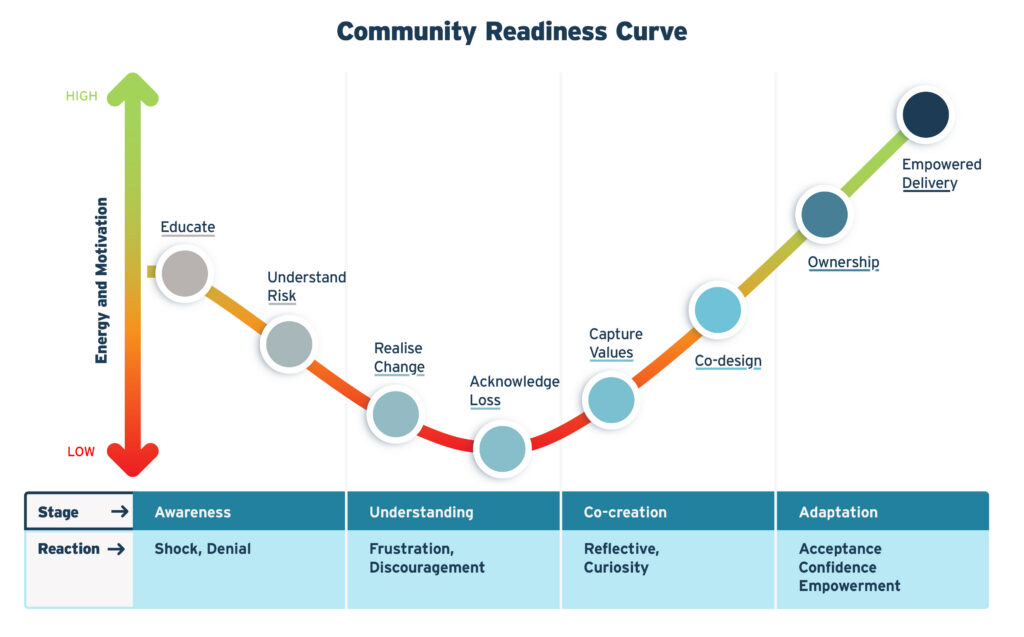
Baselining surveys help establish how ready a community is for coastal change, including current levels of awareness, understanding and acceptance. They also highlight the specific factors contributing to the system deficit that need to be addressed to support effective adaptation. From there, meaningful engagement can help communities move towards acceptance through three key areas:
- Raising awareness of coastal change to help communities better understand the risk they face, particularly in areas where long-standing reliance on defences is changing due to a transition away from legacy ‘Hold the Line’ policies. Awareness-raising campaigns bring communities to a baseline level of understanding of risk, so they can meaningfully engage in decisions about their future.
- Education helps communities understand why change is happening, including the links between coastal processes, climate change and policy. Physical models, visual materials and work with local schools can make these issues more tangible, helping people engage more confidently in adaptation planning. This also embeds understanding in the next generation of decision-makers and community spokespeople, strengthening the legacy of the choices being made today.
- Acknowledging loss helps communities feel that their experiences are recognised. Coastal change can have devastating impacts on people’s lives, livelihoods and health. Communities will be concerned about both individual and collective loss, which needs to be acknowledged with empathy and understanding. Without this, engagement can feel dismissive, creating resistance and making adaptation more difficult to deliver.
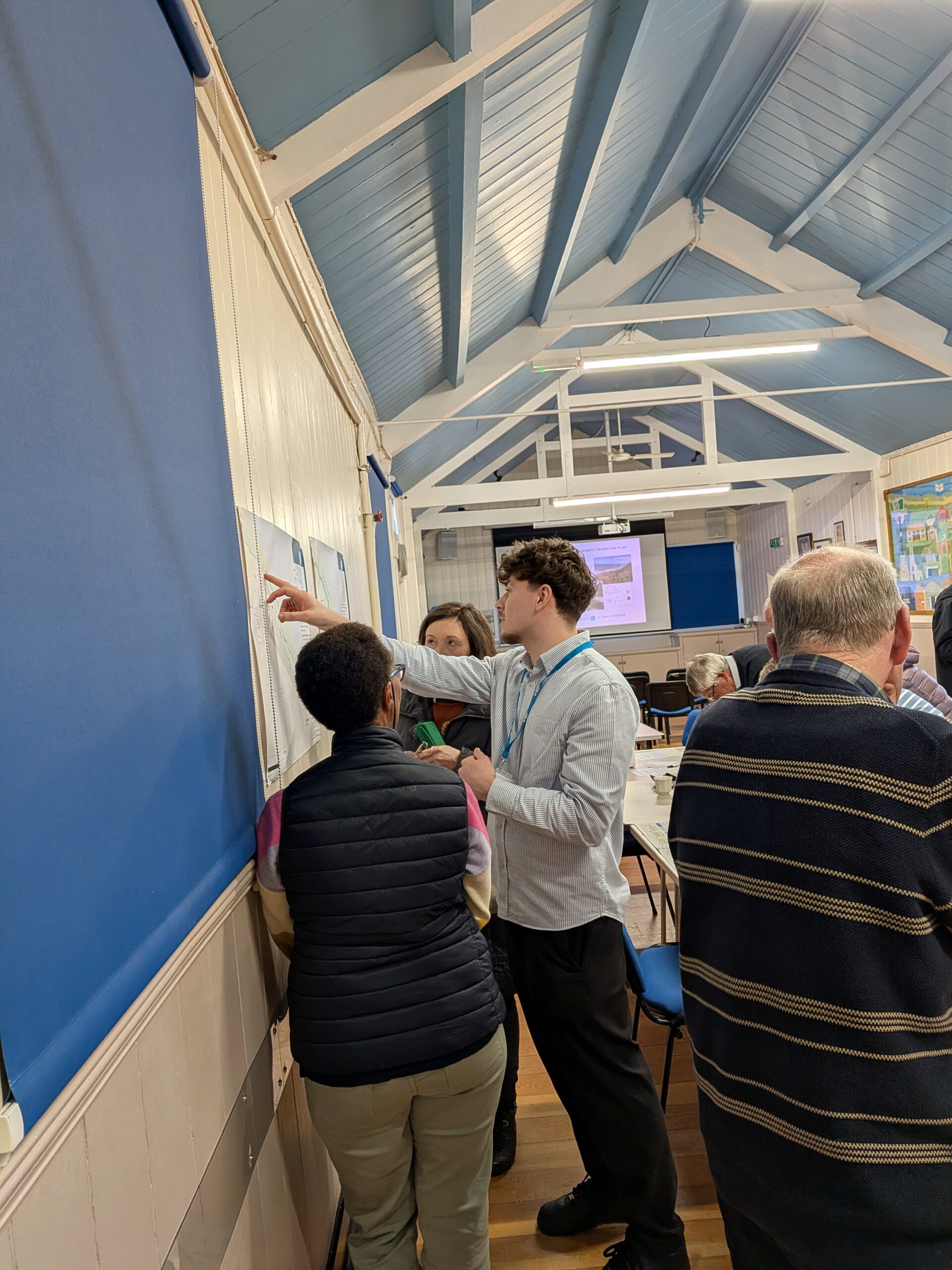
All of this requires thoughtful engagement, using accessible language and providing simple visual resources. Creative methods, interactive visualisation tools and the arts can bring difficult conversations into a more accessible space where communities feel heard and understood. Lived experience helps build empathy by listening to those experiencing loss, while working with local community groups, residents, businesses, and landowners supports clear communication of complex messages and strengthens confidence in the process.
Only once there is a general acknowledgement and acceptance of coastal change can communities begin to reimagine their future, engage in adaptation planning, and contribute to a shared long-term vision. This requires a focus on what people value most about a place, recognising that while physical change or loss may occur, those values can still be retained over time.
This creates a staged journey to build local ownership and deliver what comes next.
Adapting co-design
Readiness is what makes effective co-design possible. When communities understand the risks, have had space to process change, and can articulate what they value most, they are better able to shape realistic and locally meaningful adaptation plans. It also builds confidence in the process because people can see that difficult choices are not being imposed suddenly, but explored openly, honestly and with time for local voices to influence the outcome.
Co-design is therefore not just a participation exercise; it is the point at which readiness becomes shared ownership and long-term delivery capacity.
- Capturing the values and significance of a local community is key to successful local adaptation planning, ensuring that the community voice is heard and incorporated into plans and processes. This helps focus plans on what matters most to communities and helps capture the intangible elements such as sense of place, community connections and cultural value. Listening exercises and creative engagement are useful tools in facilitating these conversations using techniques such as “heat mapping” to help convey narratives and feelings around place. These insights help inform decision-making and ensure adaptation plans are grounded in local context, supporting their delivery over time.
- Co-designed adaptation plans can then be developed at a local level with communities, incorporating what matters most to the people who will be most affected. This creates the buy-in, agency and practical momentum needed for delivery. Without that involvement, adaptation plans may be technically sound but socially fragile, creating resistance, slowing transition and increasing delivery friction.
- Local ownership is vital to the sustainability and legacy of adaptation planning and to maintaining community readiness. Local adaptation plans should complement existing plans and policies and be embedded within governance arrangements to support delivery. Decision-making must also be supported with the tools and resources needed to act, including through local action groups or Parish Council sub-committees. This helps embed adaptation in practice, strengthening accountability and enabling coordinated delivery across the community system over time.
Preparing communities to shape coastal change
Community readiness is not a precursor to adaptation planning, nor an afterthought once plans have been drafted; it is a core part of adaptation planning. It helps people recognise, understand and process coastal change before they are asked to shape difficult choices about the future. Through awareness-raising, education, acknowledgement of loss, accessible engagement and clear routes into co-creation, communities can move from being recipients of change to active partners in transition. Plans that reflect local values, identity and priorities are more likely to gain legitimacy, be owned locally and be sustained through delivery. Without readiness, adaptation risks becoming something imposed on communities. With readiness, it becomes something communities can help shape, lead and carry forward.

For more information about our work in coastal adaptation and resilience, contact Doug Pender, Technical Director, Marine and Coastal Risk Management.