
Street tree condition surveys for Inverclyde Council
We were commissioned by Inverclyde Council to undertake an annual tree survey of their street trees in four geographical locations within Inverclyde, covering Greenock, Gourock, Port Glasgow and Kilmacolm.

Managing tree health across Inverclyde
Following the successful delivery of these initial surveys, we were also requested to conduct Ash Die Back (ADB) surveys. We provided the client with advice and outlined a suitable approach to these ADB surveys, which accords with current guidance on surveys and managing ADB in Scotland.
- Client Inverclyde Council
- Location Inverclyde, Scotland
Modernising tree records and maintenance through bespoke surveying
The initial tree surveys required the recording of bespoke fields, including the nearest property number or house name, street name, district, planting pit features, and if the tree was causing any issues, such as roots disrupting the highway or footpaths. As part of the output requirements, a tree works schedule was also produced for the Council with critical works and short/mid/long-term pruning requirements, which were then issued to tree contractors.
For the initial surveys, we recorded the data using a bespoke survey template to meet the client’s individual needs, allowing for the seamless transfer of the data into their own tree management software.
The survey schedules were similarly matched to existing data fields, which allowed the Council to avoid replication of works schedules and ensured that the works could be provided to tree contractors with clear works specifications.
Streamlined ADB assessments and Data Integration
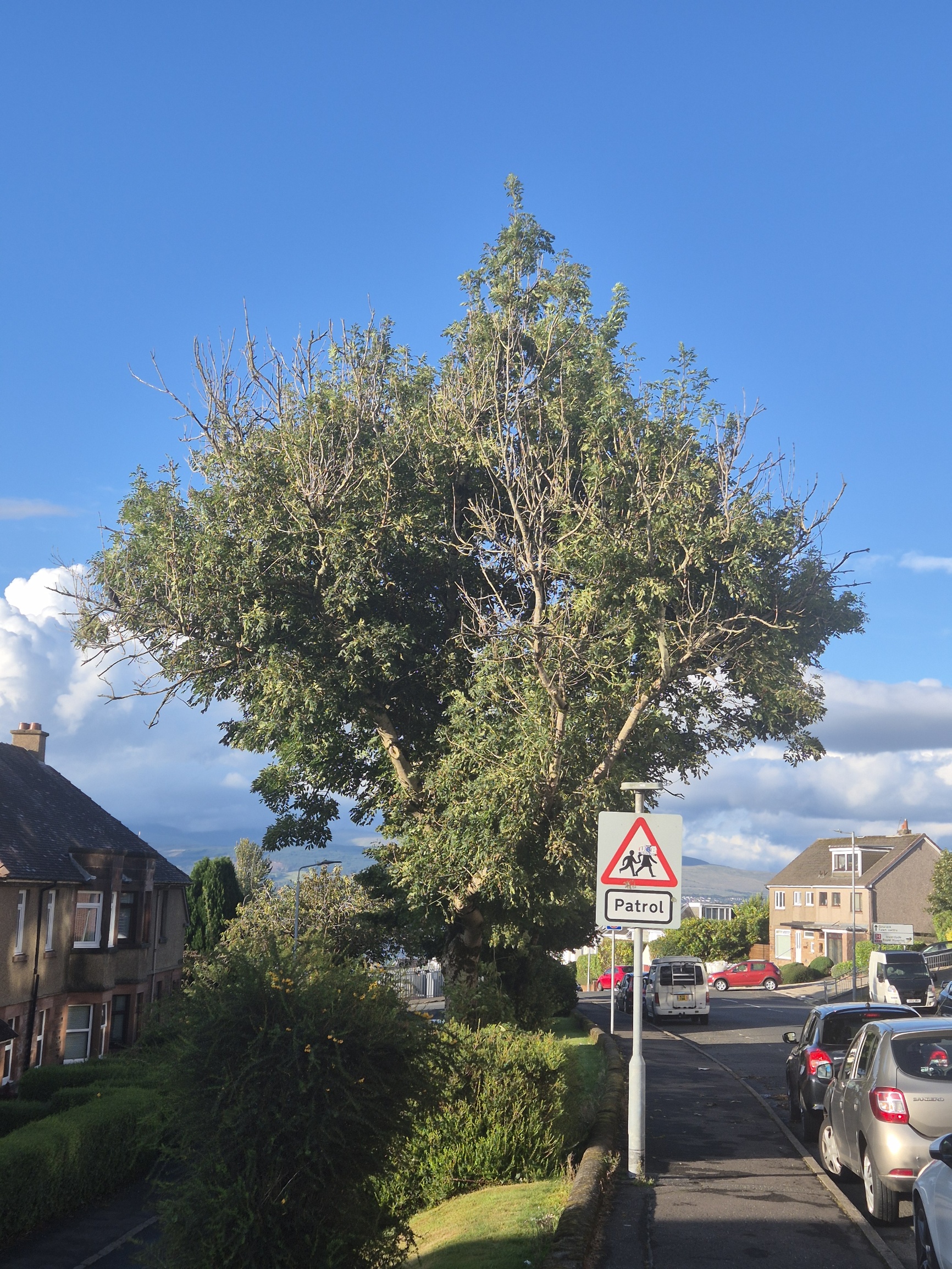
The ADB assessments included identifying symptoms consistent with ADB. Photographs were taken so that future comparisons of tree canopies could be undertaken, which would aid in the decision-making and management of infected trees. Our consultants ensured the photographs were taken from the same location and orientation for each of the trees in full leaf and at the end of the growing season. By producing visual comparisons of the photographs, an analysis of crown densities and potential crown dieback was possible.
When the survey of the ash for ADB was undertaken, we advised the council to wait for the leaf emergence to aid in identifying infection symptoms. The initial survey data allowed us to identify the ash stock within the four jurisdictions within moments, and a route was then quickly plotted, which allowed for the proficient assessment of the trees and reduced our overall carbon footprint.
As a result, we were able to update the council's records in one single operation. While inspecting the trees, we were able to source new tree tags and tag the trees in the process.
Ongoing arboricultural support and community engagement
Following the initial delivery of the tree survey and ash dieback surveys, our Arboricultural Consultant has continued to support the Council by answering management queries. As an added benefit they have undertaken site meetings with local residents to discuss individual tree impacts and issues. Our consultant has also provided advice to the council on the potential future management of their Ash stock.

Contact our arboriculture team for more information.