Pevensey Star Inn Gates replacement project
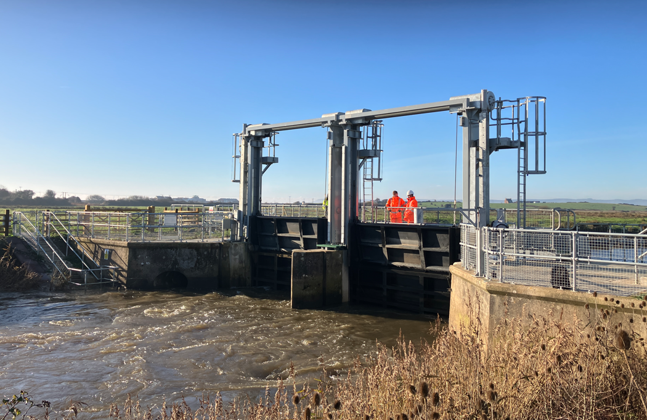
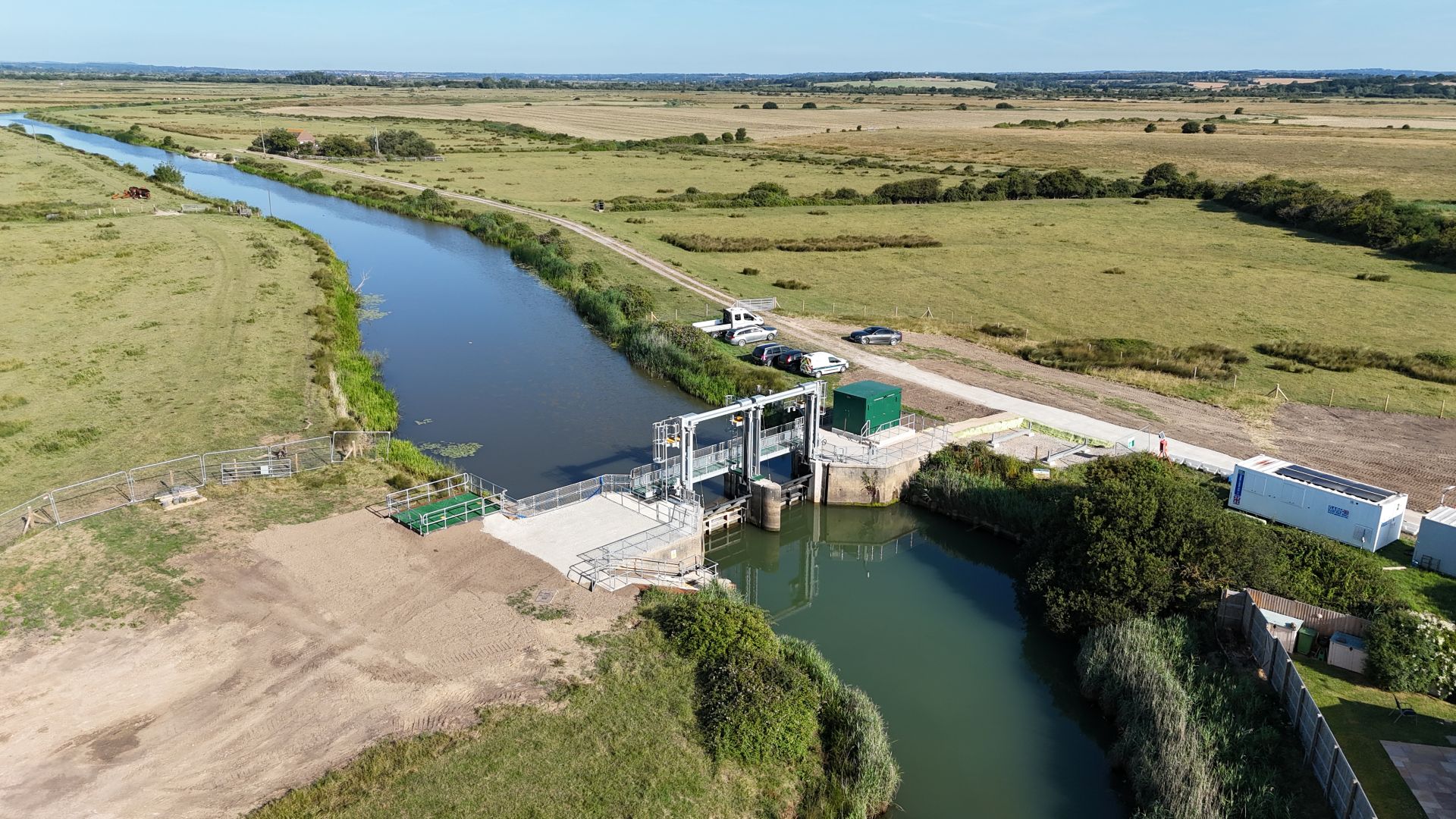
The Star Inn Gates are a critical water control structure for the Pevensey Levels, an area of highly significant wetland of national and international conservation importance. With the gates becoming prone to frequent failure and reaching the end of their serviceable life, this project saw us work in collaboration to design replacement gates that would allow greater control over water levels and ensure optimal conditions for the site’s rare species and habitats.

The Pevensey Levels is a 3,600ha Site of Special Scientific Interest (SSSI), a Ramsar site, and Special Area of Conservation (SAC) in East Sussex. Located on the eastern segment of the levels, the Star Inn Gates play an essential role in maintaining water levels across the site.
- Client Environment Agency
- Location Pevensey Levels, East Sussex
- Partners VolkerStevin, KGAL, Fairfields Engineering
- Services
Design innovation driven by advanced modelling and environmental expertise
As a result of frequent breakdowns, significant leakage and outdated design, the original Star Inn Gates made the fine management of water levels extremely complex, impacting the overall condition of the SSSI. Any proposed solution needed to address this, whilst also ensuring that flow conditions were maintained during construction and that temporary works were sufficient to manage 30 tonnes of water. As the project formed part of a wider coastal strategy, which recommended an adaptive approach to managing climate change, the appraisal period for any solution was also limited to 30 years.
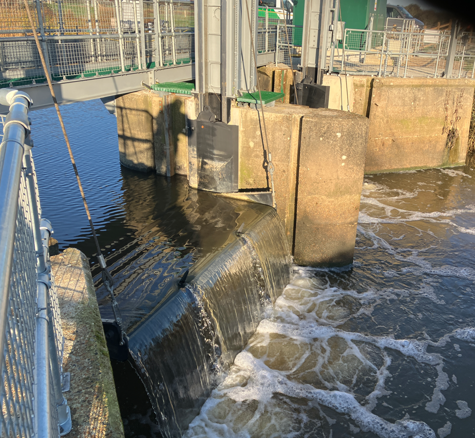
We supported the collaborative development of designs for an innovative hybrid gate and control structure. This included an upper section to function as a tilting weir and a lower section consisting of a vertical gate. Due to the novel nature of the solution, we also completed Computational Fluid Dynamics (CFD) modelling to mitigate risk to the existing structure and assess the scour and public safety risk from flow changes. As the gate would be one of just two examples of its kind in England, we were also required to provide a detailed operational assessment, including a full Hazard and Operability assessment.
A one-of-a-kind eel pass designed to automatically adjust to changing water levels
As part of our role, we also designed a specialist eel pass, which would allow for seasonal variations in water levels. The existing pumped pass had been subject to multiple failures, and due to the changing water levels, a static, gravity-fed eel pass would not have been suitable. Working with the Environment Agency fisheries team, we developed an innovative solution to ensure a consistent flow without manual or electrical operations. The buoyancy-aided design would also allow eels to access the wetland year-round, regardless of seasonal changes in the waterline.
Working as one team to reduce carbon and deliver social value
Close collaboration across all stages of the project allowed significant carbon savings to be made - with the design phase alone reducing the project's carbon target by 600 tonnes. Collectively, the project team also delivered over £1.2M of social value by undertaking community engagement, reusing materials from other projects, supporting wellbeing initiatives and raising awareness for charities.

As part of the design phase, we trialled the use of two pieces of Virtual Reality (VR) software. The software had multiple uses, including supporting a safety review before the commissioning of the structure. We also used VR to generate a final output of the proposed structure that could be used at public engagement events.
Evidence-based design using CFD modelling
To support the design phase, we developed a 3D CFD model to provide evidence of how the replacement gates would alter flow patterns, impact scour risk and affect existing monitoring equipment. By simulating a range of gate opening and flow conditions, we could compare the performance of the existing gates with the proposed new gates. This allowed us to assess flow patterns, velocities, turbulence and potential scour around the structure.
As a result of the CFD modelling study, the project team were able to make more informed decisions without the need for costly physical trials or site interventions. It also provided clarity on the hydraulic and scour implications and an assessment of potential mitigation measures, reducing uncertainty during the design process.
Delivering the highest standards in sustainability
Throughout the replacement project, the delivery team made every effort to embed sustainability and drive positive environmental outcomes. As a result, the project was awarded a BREEAM 'Excellent' rating.
The project was assessed across a range of criteria, including management approach, land use and ecology, pollution management and resource use (including carbon reduction and the circular economy). The award of an 'Excellent' rating highlights the collective commitment of the project team in driving sustainability standards. The rating also sees the project feature in the top three scores for all national Environment Agency projects.