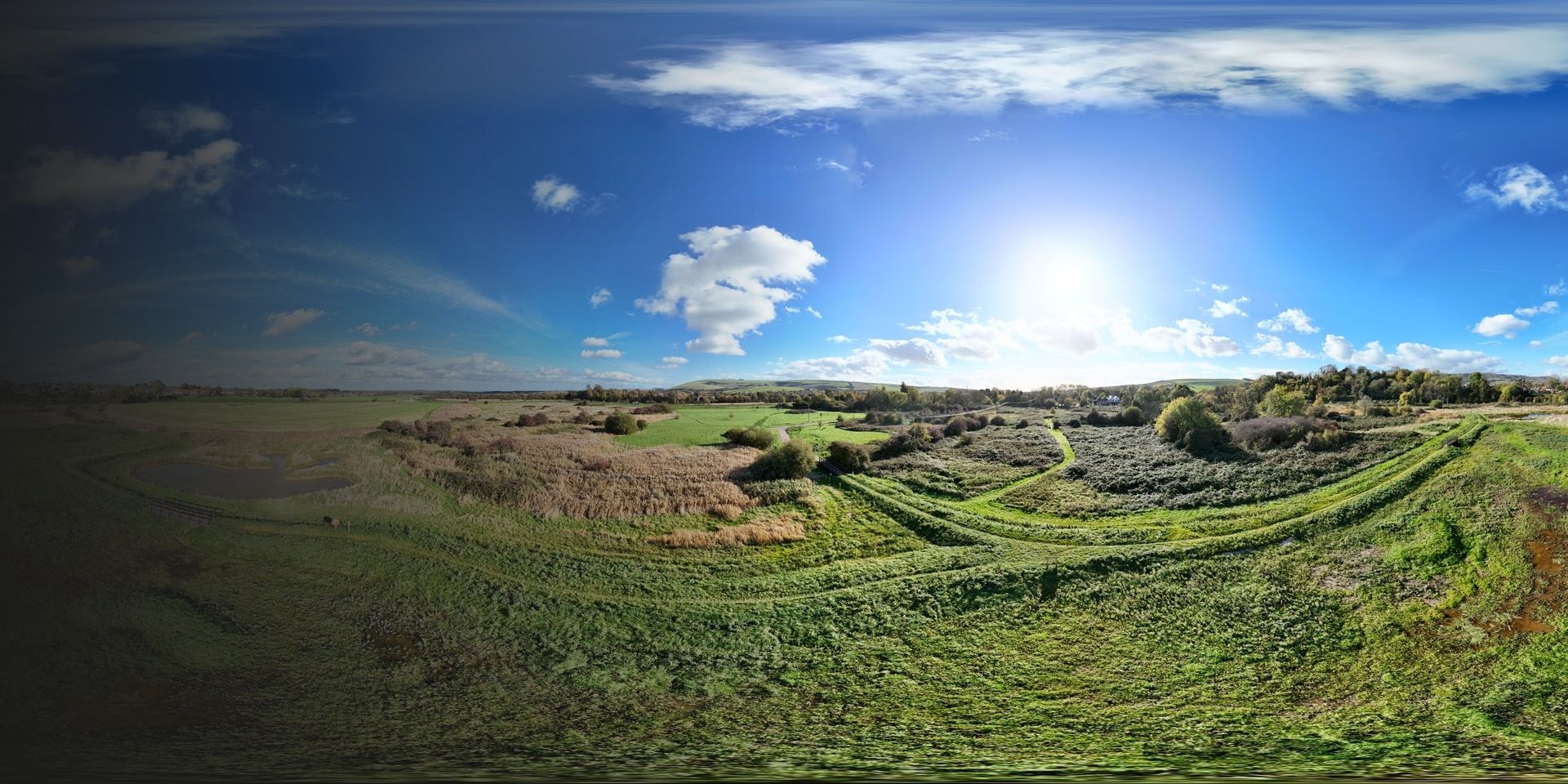
Bramber Brooks Nature Reserve: Delivering habitat creation through sustainable practices
Through low-carbon design, careful ecological stewardship, and collaborative delivery, this project has created over 3,000 m² of new freshwater habitat, improved access to nature, and delivered lasting benefits for both wildlife and local communities. Read on to find out more.

Developed as part of the Shoreham Adur Tidal Walls Scheme in West Sussex, Bramber Brook Nature Reserve has provided compensatory habitat whilst also enhancing biodiversity, providing public access and minimising environmental impacts from construction.
Working alongside the Environment Agency and VolkerStevin through the Southeast Hub Integrated Delivery Team (IDT), we brought together expertise in civil engineering, ecology, and planning to deliver a scheme that balances environmental, social, and sustainability objectives.
- Client Environment Agency
- Location West Sussex
- Partners VolkerStevin
Creating habitats for the future
The project's primary purpose was to establish a network of wetland ponds to compensate for habitat impacts associated with the Shoreham Adur Tidal Walls Scheme. Wetland habitats are among the UK's most valuable ecological resources, providing feeding, breeding and refuge opportunities for a wide range of species while contributing to the resilience of local ecosystems.
Through close collaboration across disciplines, we developed a design that balanced habitat creation objectives with practical construction considerations and long-term site management. The completed scheme delivered more than 3,000 m² of new freshwater habitat by creating four wetland ponds, forming a diverse mosaic of habitats that support a variety of wildlife.
Ecological enhancements extended beyond the ponds themselves. The project also delivered four reptile banks, a hibernaculum, three bird boxes, and a bug hotel, providing valuable nesting, shelter, and overwintering opportunities for species across the reserve. Together, these features strengthen ecological connectivity and contribute to the site's long-term biodiversity value.
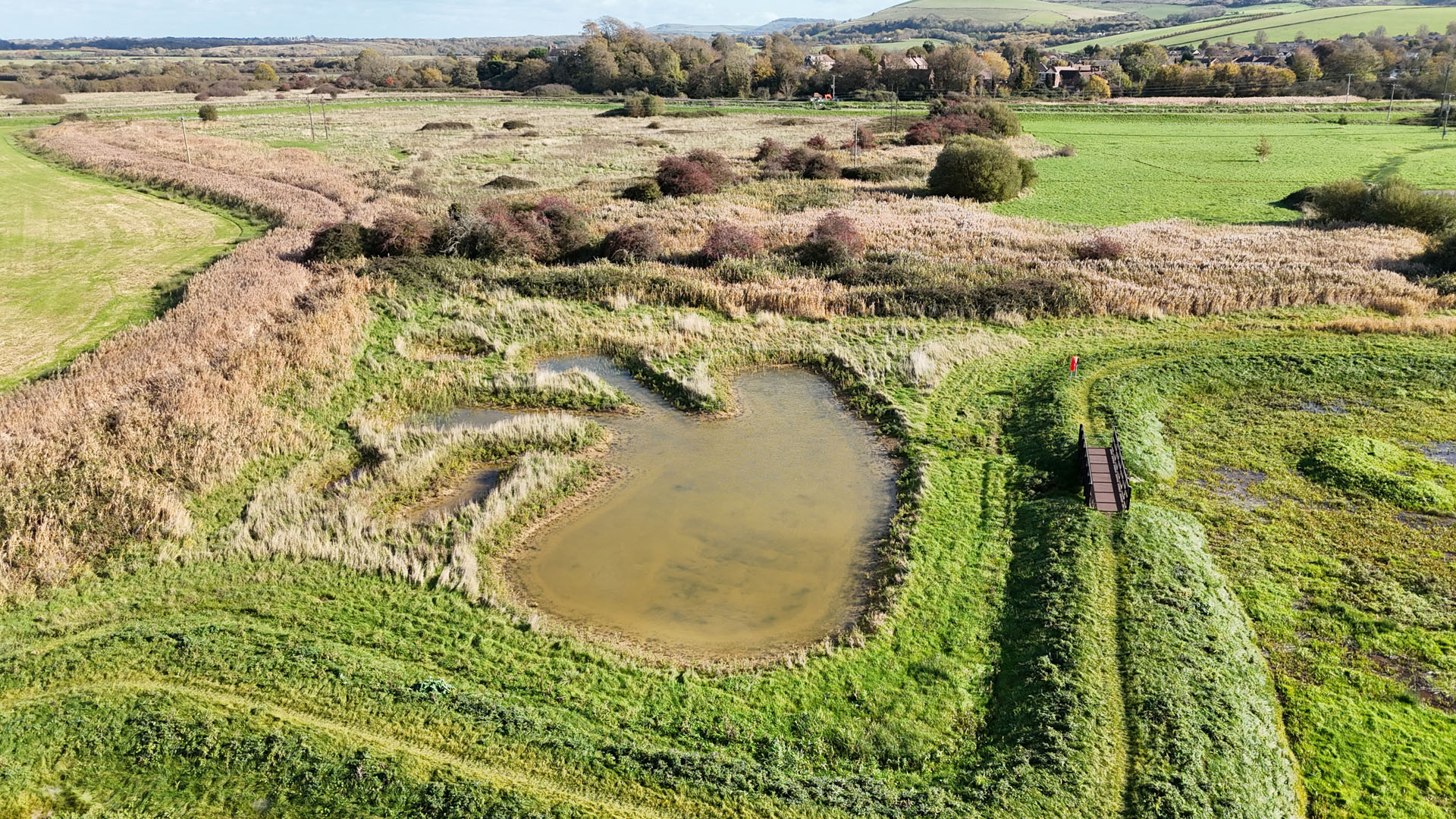

Bramber Brook Nature Reserve development
Reducing carbon through sustainable design
A key achievement of the project was adopting a low-carbon design approach that maximised on-site reuse of materials.
Our team identified an opportunity to use material excavated from the wetland ponds to construct a raised walkway. This cut-and-fill approach eliminated the need to transport surplus material off-site and removed the requirement to import large volumes of fill material.
By treating excavated soil as a resource rather than waste, the project significantly reduced vehicle movements, transportation emissions and construction costs. The approach also minimised disruption to surrounding habitats and demonstrated how circular economy principles can be successfully integrated into habitat creation schemes.
This focus on sustainable design ensured that environmental benefits were achieved not only through the creation of new habitats but also through the way the project itself was delivered.
Improving community access to nature
While ecological enhancement was central to the project, improving access to nature was also an important objective.
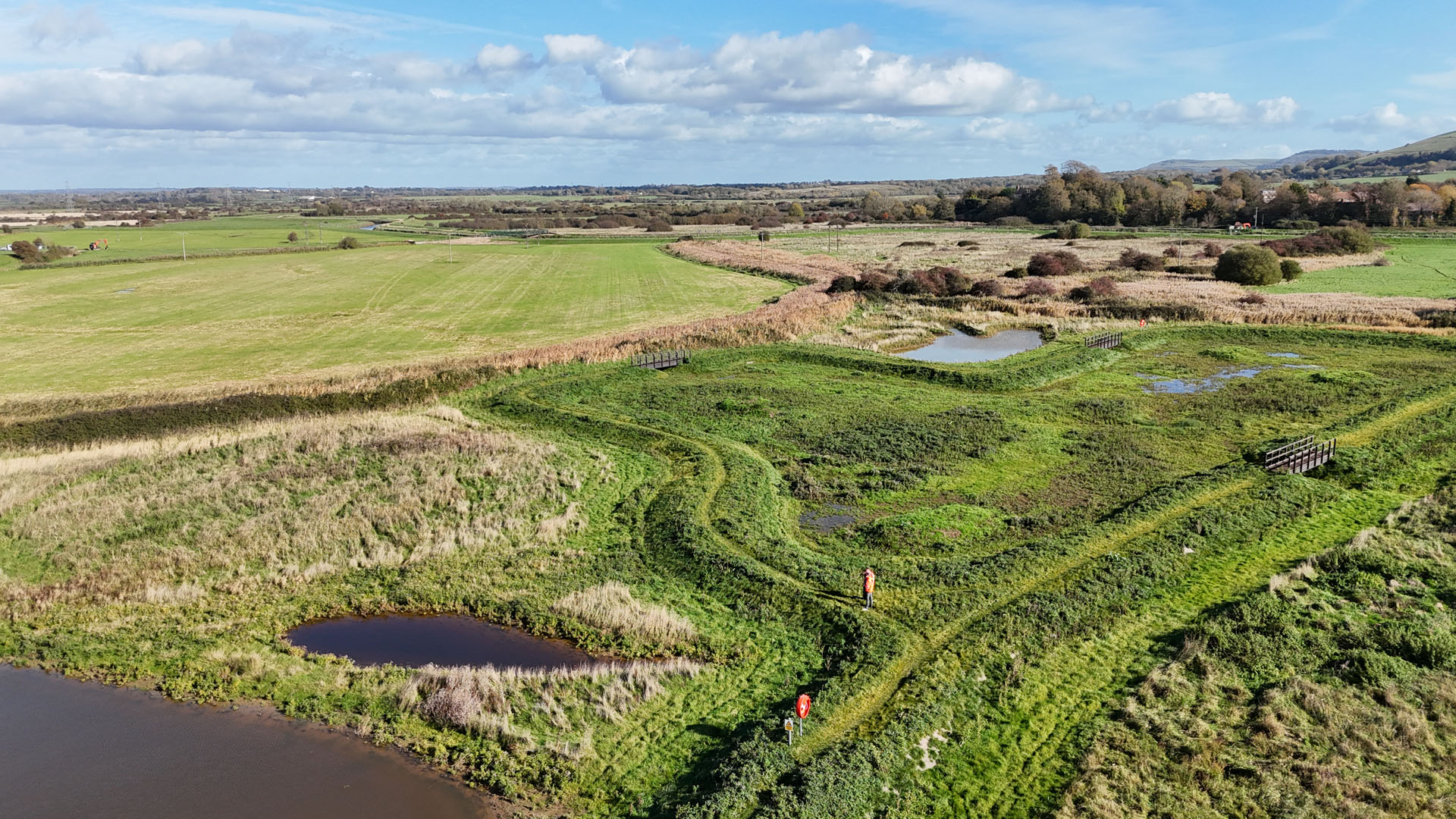
The scheme delivered more than 450 meters of raised walkway, providing year-round access to the reserve, allowing visitors to experience the wetland landscape while protecting sensitive habitats from excessive disturbance. The route creates new opportunities for local communities to engage with nature, observe wildlife, and enjoy the environment.
Designing a raised feature within an active floodplain required a careful balance between accessibility and hydraulic performance. To maintain natural floodplain processes, the raised walkway was designed as a discontinuous bund incorporating drainage gaps that allow water to move freely across the site during high-flow events. Bridges spanning these gaps provide safe public access while preserving floodplain conveyance and preventing water impoundment, benefiting both visitors and the wider ecosystem.

Protecting ecology throughout delivery
Working within a sensitive ecological setting required careful planning from the earliest stages of the project.
Ecological surveys were undertaken to identify protected species and determine any mitigation measures required during design and construction. These surveys identified healthy populations of reptiles, including common lizards, slowworms and snakes, as well as breeding pairs of Cetti's warblers.
The findings informed both the project design and construction programme. Vegetation management activities were carefully timed to coincide with warmer weather conditions, allowing reptiles to remain active and move away from working areas. Exclusion zones helped avoid disturbance to breeding birds and other sensitive habitats.
The project team also minimised the contractor's working footprint wherever possible, reducing impacts on surrounding habitats. An Ecological Clerk of Works supported delivery and ongoing management activities, meaning environmental commitments were implemented throughout the project lifecycle.
Creating a legacy within the community
Bramber Brooks Nature Reserve is a successful example of how habitat creation can deliver benefits that extend beyond environmental mitigation. The completed scheme has created over 3,000 m² of freshwater habitat, four wetland ponds, four reptile banks, a hibernaculum, three bird boxes, a bug hotel and more than 450 meters of raised walkway, leaving a legacy for both wildlife and the local community.