
Managing archaeology in a changing climate
Recent discussions at the Historic England PARIS6 conference reinforced an increasingly urgent message: the environmental conditions that have historically preserved archaeological remains are changing. In this piece, Archaeology and Heritage Principal, Stuart Noon, explores JBA’s adaptive, future-focused approach to managing preservation, change and potential loss over time. Read on to find out more.

Changing environmental conditions and their impact on archaeological preservation
Across a wide range of environments, from lowland wetlands (Denmark) and coastal systems (Netherlands & UK) to forests (the Rhineland) and permafrost (Greenland), shifts in hydrology, climate, vegetation and land use are beginning to alter preservation conditions in measurable ways. In particular, waterlogged deposits, which have protected organic materials for centuries or millennia, are becoming more vulnerable as groundwater levels fluctuate and soils begin to dry.
This is not solely a future risk. In some locations, these changes are already affecting the condition of archaeological remains. In particular, the drying of previously waterlogged layers, such as Vindolanda and Flag Fen and peat fires in the North Yorkshire Moors, highlights the need for a more proactive and adaptive approach to heritage management.
Evolving approaches to heritage management
Encouragingly, the sector has made significant progress in understanding these processes. Advances in monitoring, modelling and data integration are providing a stronger evidence base than ever before. However, the challenge is now evolving. The focus is shifting from understanding change to determining how best to respond to it, specifically, when and where intervention is most effective, and how to align this with wider environmental and development pressures. There is also a need to join up data sets to examine overall trends.
This is driving a broader transition in approach. Traditional site-based mitigation is increasingly being complemented by landscape-scale, adaptive management strategies that recognise the dynamic nature of both environments and heritage assets.
Applying adaptive management in practice
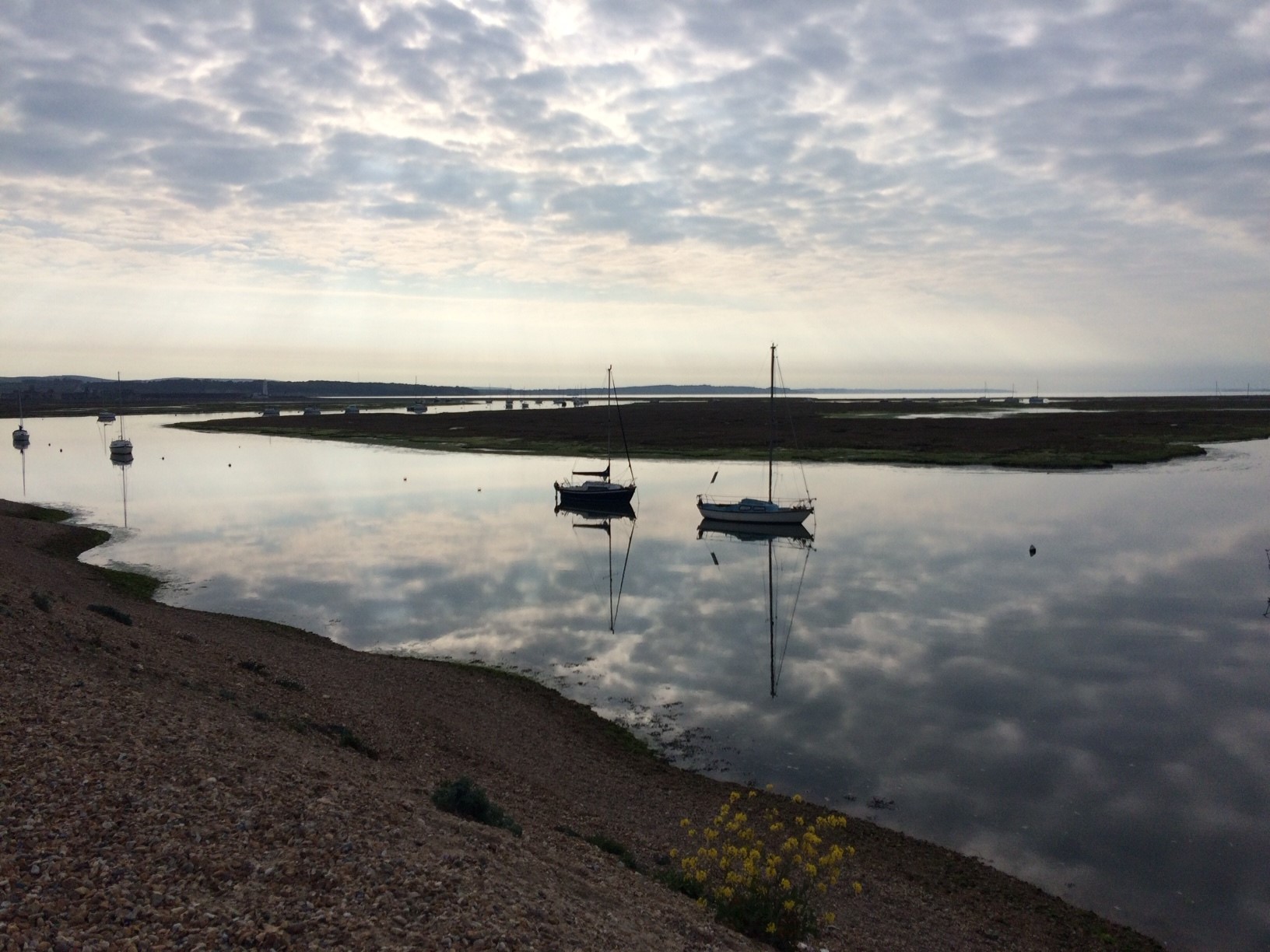
Our work on the Hurst Spit to Lymington Flood and Coastal Risk Management Strategy - presented in a collaborative paper between JBA and the Environment Agency at the recent Historic England PARIS6 ((Preserving Archaeological Remains in Situ) conference - provides a clear example of how this approach can be applied in practice.
Developed in collaboration with the Environment Agency, Historic England and local partners, the strategy integrates heritage in an adaptive pathway framework with an innovative form of critical assessment. Rather than seeking to maintain a fixed condition, it considers a range of future scenarios and identifies flexible management responses to manage preservation, change and loss over time.
A key element of this approach is the use of landscape-scale assessment, which considers designated and undesignated assets together and explores their relationship with environmental processes and historic land use. At Hurst to Lymington, this has included detailed analysis of a significant salt-working landscape, combining survey, fieldwork and interpretation to better understand its extent, condition, future preservation potential and establishing areas of archaeological potential.
Importantly, this approach recognises that environmental change will have varying effects. While some areas may become more vulnerable, others may present opportunities for improved preservation in situ. Managing this complexity requires a shift from static protection towards informed, adaptive decision-making.
The strategy is supported by a Strategic Environmental Assessment that provides a framework for identifying potential impacts, guiding policy direction and enabling future interventions. This ensures that heritage considerations are aligned with wider funding, environmental and planning priorities.
Alongside the technical aspects, there is also an important social dimension. Approaches such as Historic England’s Adaptive Release guidance highlight the value of community engagement and knowledge sharing in shaping how heritage is managed in changing landscapes. This helps ensure that decisions are transparent, inclusive and responsive to the local context.
Taken together, these developments point to a clear direction of travel. Archaeology is moving towards more integrated, forward-looking approaches that combine environmental data, landscape analysis and adaptive planning. This includes closer collaboration with environmental agencies, land managers and communities to address shared challenges.
As climate change continues to influence the condition of archaeological resources, the emphasis will increasingly be on developing practical, scalable frameworks that support timely and effective decision-making.
Building resilient approaches to heritage management
At JBA, we see this as a key area of opportunity. To build on emerging best practices, refine analytical approaches and help translate complex datasets into clear, actionable strategies for our clients. In doing so, we can contribute to a more resilient and responsive model of heritage management, ensuring that archaeological value is understood, considered and appropriately managed within an evolving environmental context.

Contact Stuart Noon for more information.