Collaboration, identity and enabling change: Key takeaways from JBA’s UKREiiF fringe event on placemaking
As part of UKREiiF 2026, we brought together a panel of professionals to solve the placemaking riddle, discussing how places can be better shaped to support communities, climate resilience, and long-term growth. Read on to discover more.

Solving the placemaking riddle
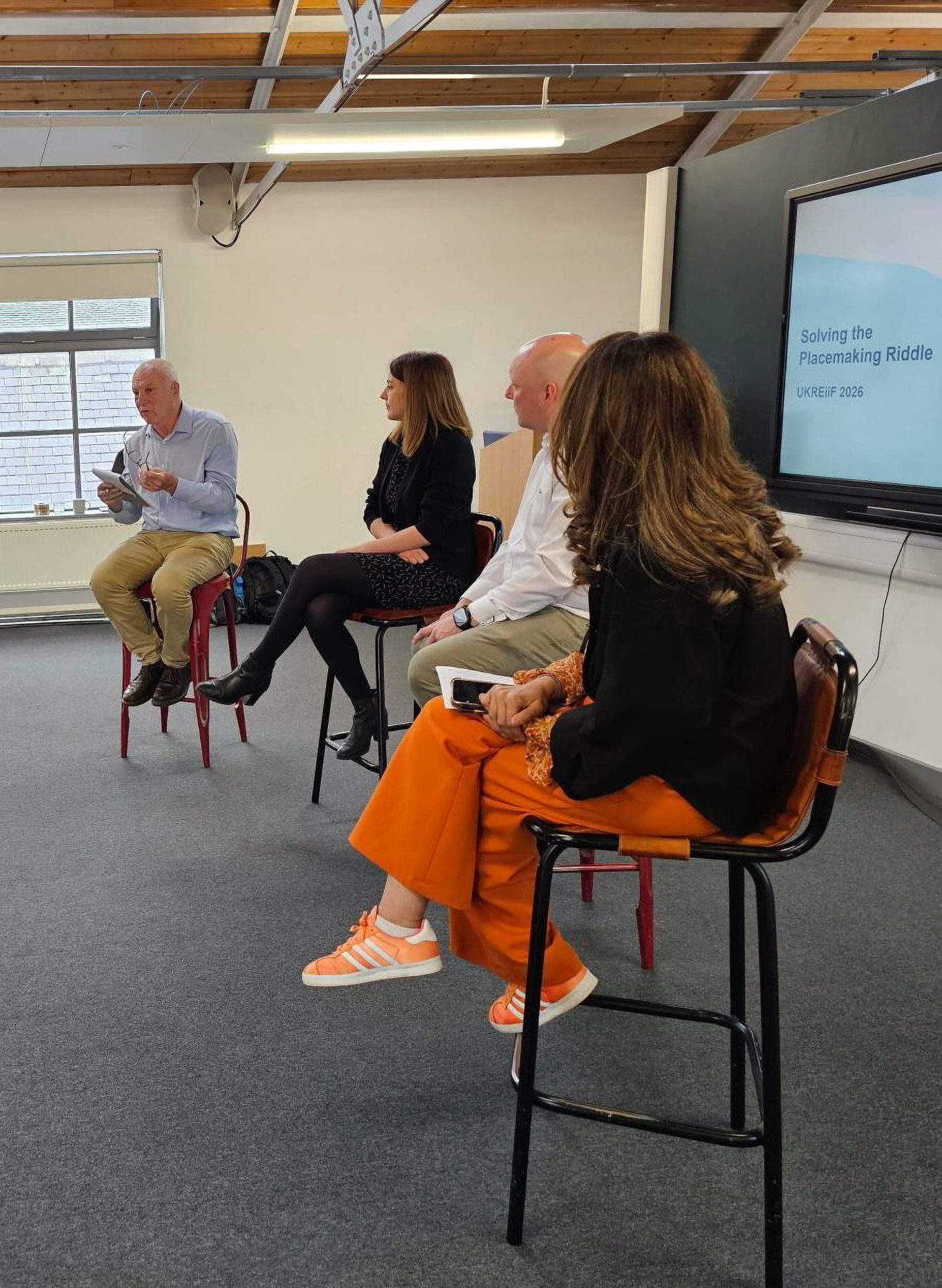
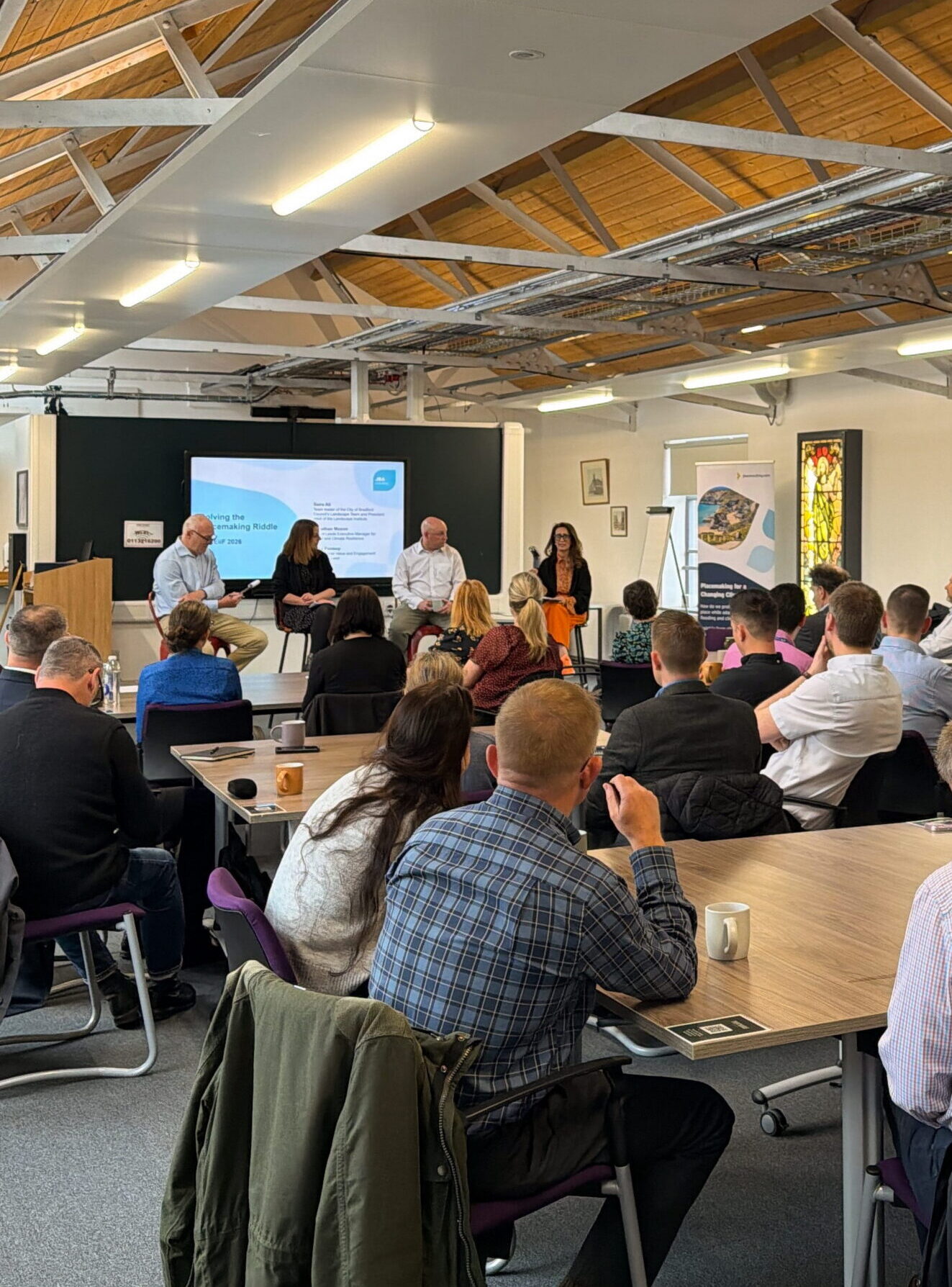
The event brought together Dr Saira Ali, FLI FRSA, Landscape Architect and Team Leader for Landscape, Design and Conservation at Bradford Council, Jonathan Moxon, Executive Manager for Flood and Climate Resilience at Leeds City Council and Lucy Formoy, JBA’s Social Value and Engagement Discipline Lead, to share their knowledge and learnings in a panel discussion chaired by JBA Director, Steve Maslen.
While each speaker brought a different lens to the conversation, three clear themes emerged throughout the discussion.
Collaboration is essential
A strong message emerging from the panel was that successful placemaking cannot happen in isolation. Creating resilient, thriving places requires collaboration between local authorities, organisations, businesses, landowners and local communities from the very beginning.
Discussions highlighted the importance of looking beyond administrative boundaries and recognising the interconnectedness of places and communities. Jonathan Moxon reflected on the need to connect upstream and downstream communities through flood resilience planning, working collaboratively with landowners, local authorities and internal council teams, to better manage the wider landscape.
The conversation also explored how local community groups, universities and trusted organisations can play an important role in helping people engage with change and feel part of the process. Across both urban and coastal examples, the panel reinforced that collaboration leads to stronger outcomes, greater trust and places that better reflect the needs of the people who use them.

Placemaking needs enablers
Another key theme was that ambition alone is not enough. Delivering meaningful change requires the right conditions, leadership and long-term support to turn ideas into action.
The panel shared lessons on how local authorities can act as enablers by taking on operational and stewardship roles to ensure projects are deliverable and sustainable over time. Leeds City Council’s approach to flood resilience was highlighted as an example of how leadership and long-term asset management can support both climate resilience and economic growth.
Both Dr Saira Ali and Jonathan Moxon added how placemaking can create wider behavioural and social benefits. Physical changes, such as improved lighting, visibility, and access to green space, can help people feel safer, encourage longer dwell times, and foster stronger connections to place.
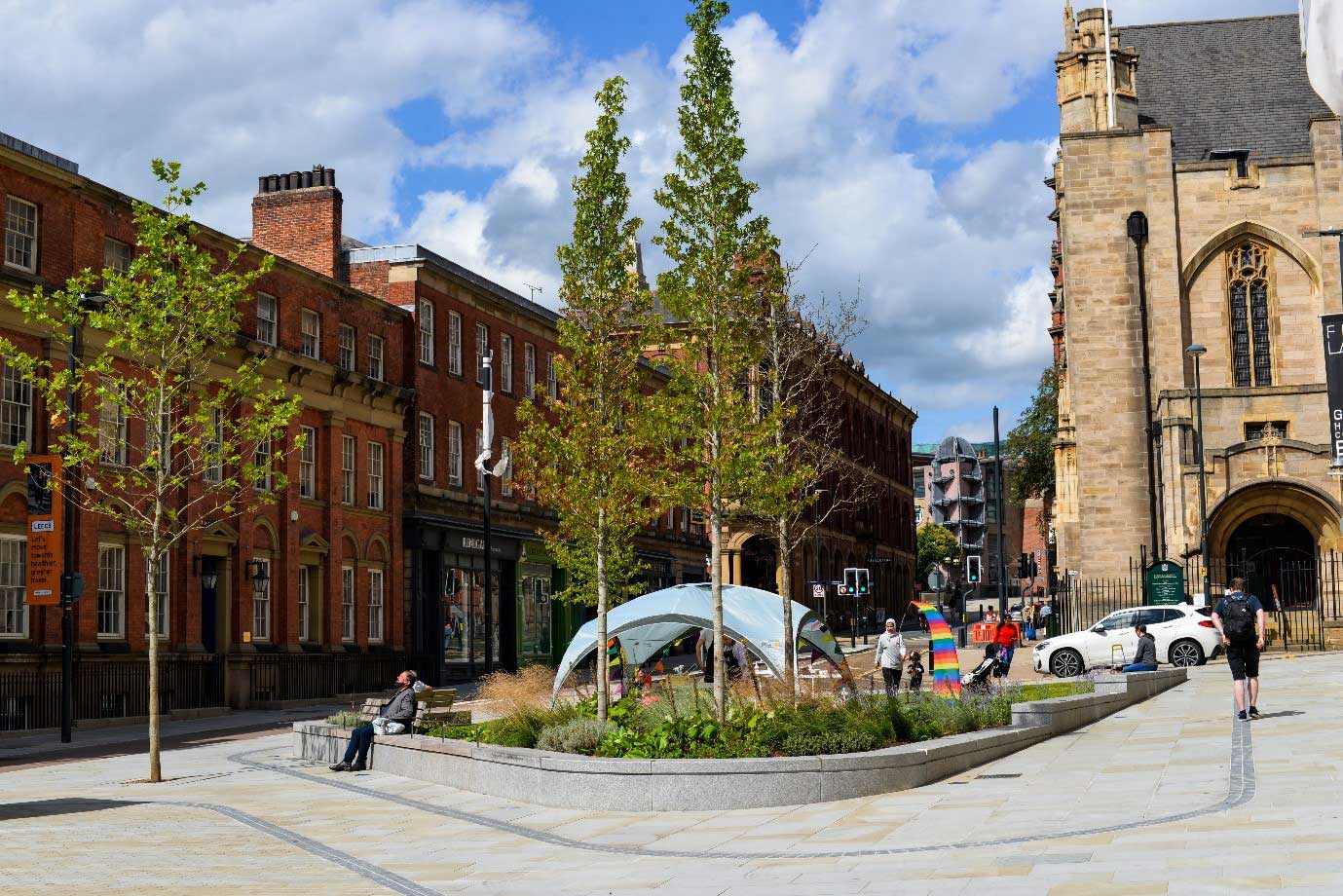
Nature-based solutions formed a central part of the discussion. Bradford’s work to introduce more green infrastructure into the city - including planting trees, creating wildflower areas and reducing road space by 200km through the centre - demonstrated how integrating nature into urban environments can improve wellbeing, encourage biodiversity and create places where people want to spend time.
The conversation highlighted the importance of learning from others, using research and evidence to guide decisions and visiting projects elsewhere to understand what works in practice.
Identity matters
Throughout the discussion, the panel emphasised that placemaking is about far more than physical development. At its heart, it is about identity, belonging and pride.
Dr Saira Ali spoke about the importance of understanding how communities experience and use places, and how co-design approaches can empower people to shape the future of their area. The panel reflected on how identity is strongest when it is discovered and nurtured within communities, rather than imposed on them.
This was particularly evident in Lucy Formoy’s shared learning from her work with coastal communities experiencing significant change and the loss of historic landmarks. Lucy shared how engagement activities helped communities explore what truly mattered to them - whether that was physical buildings, local stories or the wider essence of a place.
By involving communities early and creating opportunities for participation, projects can build excitement, ownership and trust. The discussion highlighted how tools such as mapping, art and interpretation can help communities visualise change while preserving and celebrating local heritage and identity.
Importantly, the panel stressed that, as well as engagement, communities need structures and support that enable action. Establishing local action groups and empowering communities to drive projects forward were identified as critical to turning aspirations into lasting change.
Looking ahead: Building a connection between people and place
The conversation reinforced that placemaking is not simply about transforming physical spaces. It is about creating places that support health, wellbeing, resilience and economic opportunity, while strengthening the connection between people and place.
Whether through climate resilience projects, nature-led regeneration or community-led identity work, the conversation showed that the most successful places are shaped collaboratively, supported by strong enablers and grounded in the communities they serve.