Working with nature: Unlocking more effective FCERM and catchment resilience
Nature-based solutions are no longer optional extras in flood and coastal erosion risk management; they are central to building resilient, adaptive catchments. Find out why embedding natural processes early leads to more effective, multi-benefit outcomes, and how our projects across the UK are demonstrating the value of working with nature from the outset.

Moving beyond retrofitting: A natural processes-led approach to FCERM
Nature-based solutions (NbS) cannot be a “bolt-on” to flood and coastal erosion risk management (FCERM). They are already, and will increasingly become, central to how we design resilient, adaptive catchments. Yet too often their full value is missed because they arrive too late in the process, retrofitted into schemes shaped primarily by traditional engineering, rather than emerging from an early understanding of how natural processes function.
Embedding NbS early, through an integrated, natural processes-led approach, has the potential to change what is possible fundamentally. It can unlock a wider range of options, support better long-term outcomes, and deliver benefits that extend far beyond flood risk alone.
There is no shortage of policy support for NbS in the UK. Commitments to net zero, biodiversity net gain and catchment-based thinking all reinforce their importance. However, in practice, projects in the UK still rarely take a nature-based approach from the outset.
Drawing on over 20 years of JBA’s work in natural flood management, in this article, we reflect on why early adoption remains challenging, how those challenges can be addressed, and what good looks like in practice. Read on to find out more.
-
Appraisal frameworks favour certainty

One of the most persistent barriers is how we appraise schemes. Traditional cost-–benefit approaches prioritise certainty and quantifiable outcomes, typically favouring interventions with clearly defined and immediate reductions in flood risk. By contrast, the benefits of NbS (slowing the flow, restoring storage, improving water quality and nature, sequestering carbon, to name a few) are often distributed across space and time. They are real, but not always easily captured within existing appraisal frameworks. As a result, they can be undervalued at exactly the point when key decisions are being made.
-
Percieved delivery risk
There is also an enduring perception of risk. Nature-based approaches are sometimes seen as less predictable than engineered solutions, particularly under extreme conditions. Questions around performance, maintenance and land management responsibilities can create caution among risk management authorities and partners.
Addressing this requires a shift in mindset, from seeking certainty through fixed standards (for conventional approaches) to managing risk through evidence, monitoring and adaptive management over time for NbS.
-
Late integration
Timing is another critical issue. By the time NbS is considered in many schemes, preferred options have already been identified. At that stage, opportunities to restore natural processes at scale (reconnecting floodplains, re-naturalising channels, reinstating storage pathways) are often constrained by budgets, land availability and design commitments.
-
Fragmented governance
Underlying all of this is the complexity of working at a catchment scale. Delivering NbS requires coordination across landowners, sectors and institutions. Building those relationships takes time, and project structures do not always allow for that early investment.
Our systems approach to delivering effective NbS
Our approach is rooted in understanding the catchment as a system, rather than focusing solely on the location of flood risk. This means looking upstream and downstream, exploring how water moves, where it is stored, and how those processes have been altered over time. From there, it becomes possible to identify where working with nature can reduce risk more effectively (and often more sustainably) than relying on engineered defences alone.
Integrated modelling plays a key role in this. By combining hydrological and hydraulic modelling from the outset, we can test how different interventions, both natural and engineered, interact. This allows NbS to be assessed not as an add-on, but as part of a system of measures contributing to peak flow reduction, timing delays and overall resilience.
Equally important is early engagement. Nature-based approaches depend on land managers, communities and delivery partners. Bringing them into the process at the right time supports co-designed solutions that are practical, locally supported and deliverable.
Finally, framing the full value of NbS is essential. Flood risk reduction remains central, but projects are increasingly expected to deliver more. By explicitly recognising benefits such as improved water quality, biodiversity enhancement and carbon reduction, it becomes easier to align NbS with wider objectives and funding opportunities.
Working with nature: What does good look like in practice?
Across the UK, there is now a growing body of experience that demonstrates the value of embedding NbS early. While each catchment is different, several JBA projects illustrate how this approach can translate into better outcomes.
Holnicote: Demonstrating the art of the possible
The 2009 Holnicote multi-objective demonstration project marked a step change in UK flood risk management. Commissioned by Defra following the Pitt Review, the project set out to test whether working with natural processes at a catchment scale could reduce flood risk while delivering wider ecosystem benefits.
As part of a multi-disciplinary team with the National Trust and Penny Anderson Associates, JBA led key elements of the hydrological and hydraulic modelling and helped design the monitoring and evaluation framework. Rather than relying on assumptions, the project set out to build a quantitative understanding of how interventions across the catchment (upland management, floodplain reconnection and changes in land use) would influence runoff, storage and flood peaks.
What made the project pioneering was its explicit focus on multiple outcomes. Alongside flood attenuation, the work assessed benefits for water quality, carbon, biodiversity and landscape, demonstrating that these are not additional extras, but integral to how catchments function.
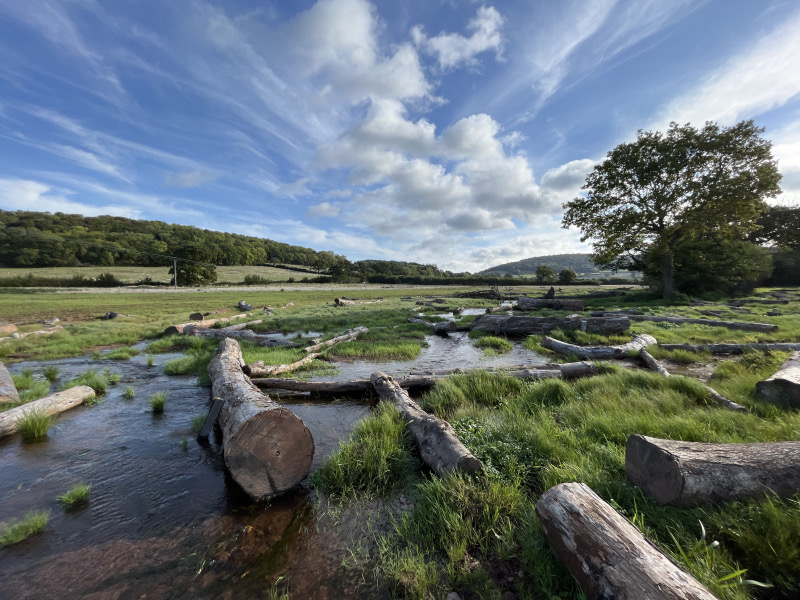
In doing so, Holnicote helped establish an evidence-based case for NbS that continues to influence practice today. Its legacy can be seen in the continued evolution of the estate, including JBA-supported Stage Zero floodplain reconnection and more recent beaver-led restoration, both building on the same principle of restoring natural processes at scale.

FCRIP: Building the evidence and scaling up ambition
More recently, the Flood and Coastal Resilience Innovation Programme (FCRIP) has played a critical role in moving NbS from pilot projects towards mainstream delivery. Through JBA’s involvement in projects such as Ousewem, DRIP and Project Groundwater, the programme has helped strengthen the evidence base and test new approaches at scale.
A key step forward has been the use of strategic, catchment-scale modelling to target interventions where they can deliver the greatest benefit. This has enabled a more confident, data-led approach to planning NbS, helping to overcome some of the uncertainty that has historically limited early adoption.
FCRIP has also broadened the scope of NbS. For example, work under Project Groundwater has explored how an NbS approach can be applied effectively in areas at risk from groundwater flooding, highlighting the need to understand ephemeral flow paths and the behaviour of the water table.
Importantly, the programme has reinforced the importance of capturing multiple benefits. Projects are increasingly demonstrating improvements in water quality and ecology alongside flood resilience, strengthening the case for investment and opening up opportunities to align funding sources.
Perhaps most significantly, FCRIP is embedding long-term monitoring and adaptive management. Building robust evidence over time will be essential in normalising NbS as a core component of FCERM.


Connecting the Culm: Co-creating catchment resilience
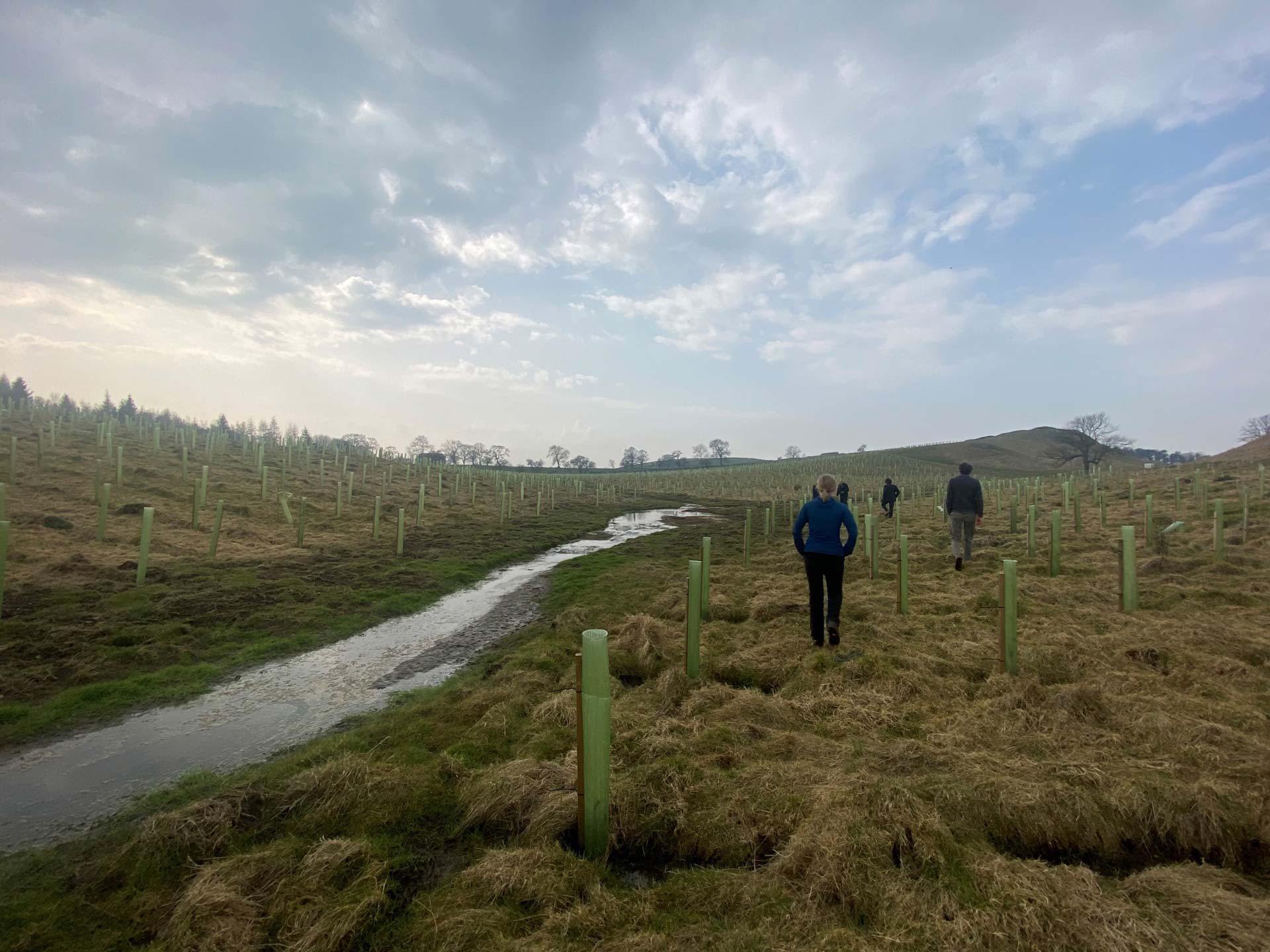
The Connecting the Culm project in Devon shows what can be achieved when NbS is embedded early and developed collaboratively. Part of the wider Devon Resilience Innovation Project, it brings together local communities, land managers, researchers and practitioners to address both flood and drought risk in the River Culm catchment.
At its core is a commitment to co-design. Rather than imposing predefined measures, the project works with those who live and work in the catchment to identify interventions that restore natural processes while supporting local priorities. This includes measures that slow and store water in the landscape, improve soil health and enhance water quality.
The project also reflects a more integrated understanding of resilience. By considering flood risk, water availability and ecosystem health together, it demonstrates how NbS can deliver multiple, interdependent benefits. This whole-system thinking is only possible because NbS was embedded from the outset, shaping both the objectives and the solutions.
What needs to change and what already is?
There is clear momentum behind NbS, but further change is needed to fully embed natural processes in FCERM. Appraisal approaches are evolving, with increasing recognition of the need to capture multiple benefits. Funding is also beginning to shift, with greater flexibility to support early-stage investigation and partnership building. At the same time, improvements in monitoring and modelling are helping to build confidence in long-term performance.
Perhaps most importantly, there is a growing shift in mindset. Engineers, planners and decision-makers are becoming more comfortable working with uncertainty, designing schemes that can adapt over time rather than relying on fixed solutions.
JBA’s role is to continue to support this transition, bringing together evidence, modelling capability and practical experience to help clients navigate a more integrated approach to flood risk management.
If you would like to discuss how we can support your project, get in touch with our team.