Co-design: Empowering community-led climate resilience
Climate change is not just a physical crisis – it also reshapes lives socially, emotionally and culturally. Addressing its full impact demands multidisciplinary approaches that are co-designed with the communities most affected. Read on to find out what happens when people are not merely consulted, but empowered to lead the solutions that shape their futures.

Co-designing people-centred climate solutions for lasting resilience
Climate change is a multifaceted problem that poses significant risks to the natural environment and communities. Considerable work across environmental and engineering disciplines has delivered an array of solutions to physical climate impacts, including flood and coastal defences, barriers, property flood resilience measures, and nature-based solutions. However, climate impacts are also experienced socially, emotionally and culturally, not just physically. Therefore, to effectively address all the impacts of climate change, we require multidisciplinary approaches that co-design solutions with impacted communities.
Co-design helps us understand key community needs and values, identify opportunities for maximising social, environmental and economic benefits, and most importantly, it allows us to empower communities to act against the impacts of climate change. This is why we have moved beyond engagement as an add-on or tick-box exercise, instead leading a people-centred approach alongside modelling, planning and engineering technical expertise. We believe climate action is more effective when communities are not just consulted but empowered to lead.
Shifting from consultation to community co-design
Traditional community consultation in the water and environment sectors has largely focused on informing and raising awareness, gathering opinions or collecting feedback on pre-designed solutions. However, these approaches can limit communities’ ability to influence and shape outcomes of projects that ultimately impact their local environments, quality of life and overall resilience. In addition, they may unintentionally reinforce power imbalances, historical exclusion and other social inequities, as they seldom create accessible spaces for individuals and community groups to share their perspectives equitably.
Co-design, on the other hand, brings in community voices from the outset to help us as consultants understand local problems and priorities, and collaboratively set the direction and desired outcomes of the project. This process requires transparency about what can and cannot be influenced, as this is also shaped by broader environmental, social and economic needs, as well as budgets and scopes. It also requires open-mindedness to explore ideas and opportunities that may not have been previously considered, but have the potential to generate greater benefits for the community and efficiencies for our projects.
In contrast with traditional one-off consultation approaches, co-design is an iterative process with an open and constant feedback loop that allows greater flexibility and adaptability. Through co-design, we can generate climate solutions that communities can take ownership of, with the right skills and capabilities to deliver sustained action, leaving them more empowered and resilient.
Listening first: our human-centered approach
Community empowerment is layered and interconnected, not a one-size-fits-all. It often begins with community-led action, where residents and local groups are directly empowered to shape and deliver grassroots responses, driving adaptation on the ground.
At a wider local scale, leadership empowerment supports local authorities, partnerships and community leaders to translate high‑level strategies into place-specific action that reflects local priorities and contexts. At a strategic level, co‑design enables broader leadership empowerment, supporting decision‑makers to make more informed, values‑based choices about risk, investment and long‑term change. While much of the behavioural and cultural change needed for climate action happens from the bottom up, through new support networks, shared values and evolving social norms, this action must be enabled and sustained by supportive governance arrangements and decision‑making frameworks.
These systems create the social, as well as physical, conditions in which empowered communities can thrive throughout their climate transition journeys. Through shared ownership and agency, communities are positioned not simply as participants but as trusted delivery partners in shaping resilient futures.
To develop climate strategies that empower communities, we first must immerse ourselves in their values, memories, and heritage. Climate impacts go beyond physical assets: they also result in loss of inheritance, memories, identity and sense of place.
No one is better placed to truly describe these impacts than the individuals within communities who experience them first-hand. Whilst acknowledging that not all individuals experience climate impacts in the same way and to the same extent, as they have different capabilities, risks and vulnerabilities. For this reason, we must meet communities where they are at.
At JBA, ensuring our engagement work is underpinned by local need assessments has allowed us to gain a better understanding of local contexts before going into communities. However, desk-based research only scratches the surface. Working with key, trusted intermediaries can be a great avenue for understanding and reaching out to communities. Intermediaries may include charities, community networks, parish councils, religious organisations, local sports clubs, schools, NGOs, VCSEs, CICs and other community “gatekeepers” who are deep-rooted in their communities and have pre-established connections with and understanding of local groups and dynamics.
Through them, we can reach different groups within the community to build trust and relationships for long-lasting collaboration. Understanding what matters to communities changes the solutions we pursue. Therefore, before we begin designing solutions, we must first listen.
Creativity as a tool for community empowerment
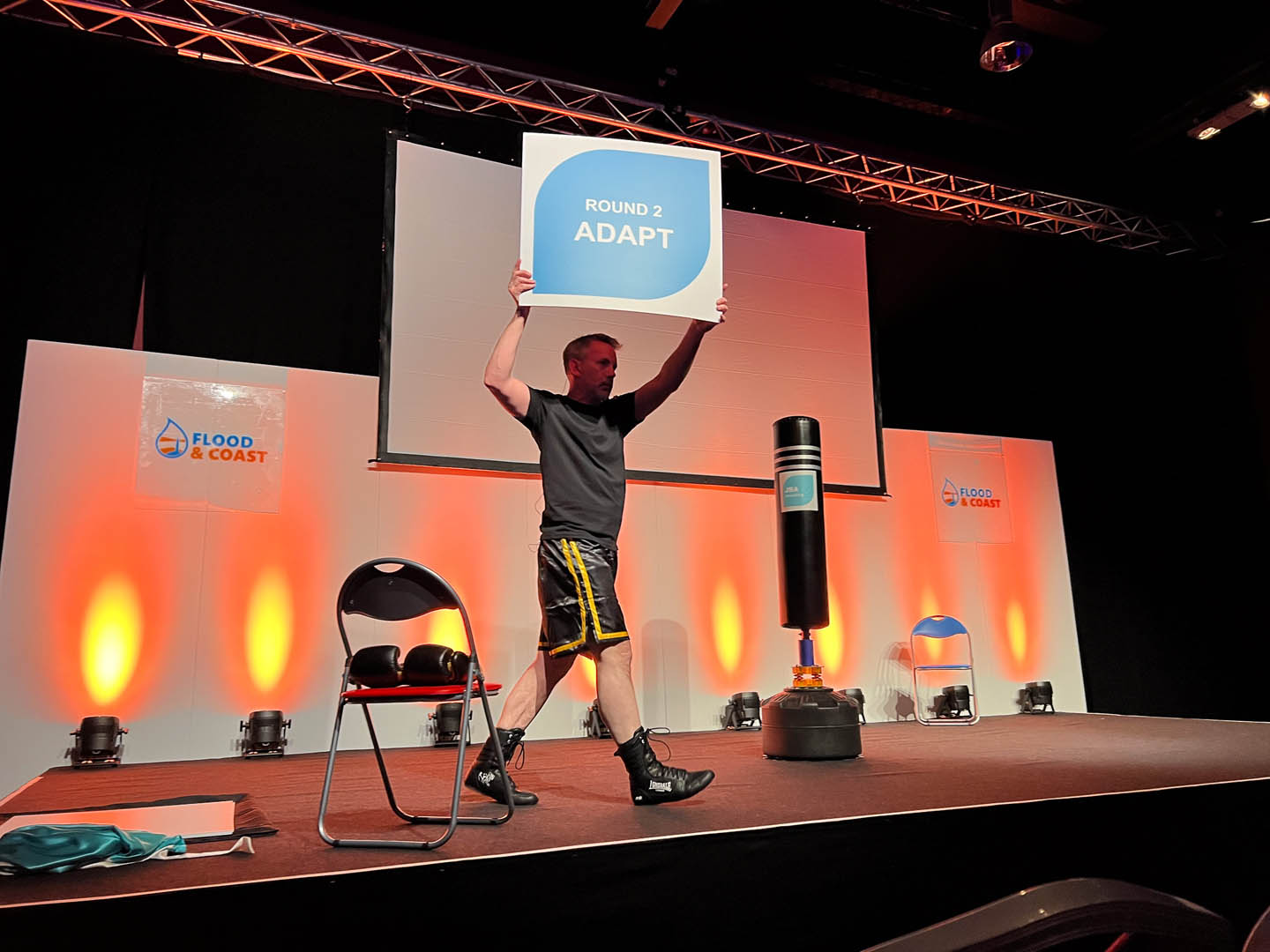
Creative engagement tools and techniques like storytelling, arts-based activities, heat maps and gamification can facilitate the co-design process. It is not about assuming that communities are not as knowledgeable as consultants (in fact, they are key knowledge-holders) and therefore require information to be overly simplified. It's about exploring complex scientific data and analyses through innovative methods that make knowledge-sharing and participation inclusive, accessible, fun and memorable.
Creative engagement allows individuals to express thoughts, share experiences, and interpret data in a way that supports inter-group dialogue, across generations, religious groups, ethnicities and abilities. Therefore, we must tailor our creative engagement approaches to fit the needs of key groups within local communities. This is where local needs assessments and collaboration with trusted intermediaries reveal barriers to participation and allow us to design with accessibility in mind to overcome them. Creative and inclusive engagement methods help surface diverse knowledge and unlock creative imagination.
Building climate resilience together
Co-design methods are not a replacement for technical expertise, but rather an essential complement to develop holistic, achievable and context-sensitive climate solutions. As climate risks accelerate and communities become more vulnerable, it is increasingly important to work with communities to understand their lived experiences, priorities and capabilities, and to co‑create actions they are empowered to shape, lead and take ownership of - while also maximising social, environmental and economic benefits.
At JBA, we don’t deliver climate resilience to communities; instead, we build it with them by combining our technical expertise with inclusive, creative and empowering co‑design approaches.

For more information about community and stakeholder engagement services, click here to contact the team.