Re-wetting the landscape at Tattiscombe, North Devon
Working in collaboration with the National Trust in the heart of the Exmoor National Park at Tattiscombe to deliver river, floodplain, and hillslope restoration and habitat enhancement.

Restoring water and reviving nature
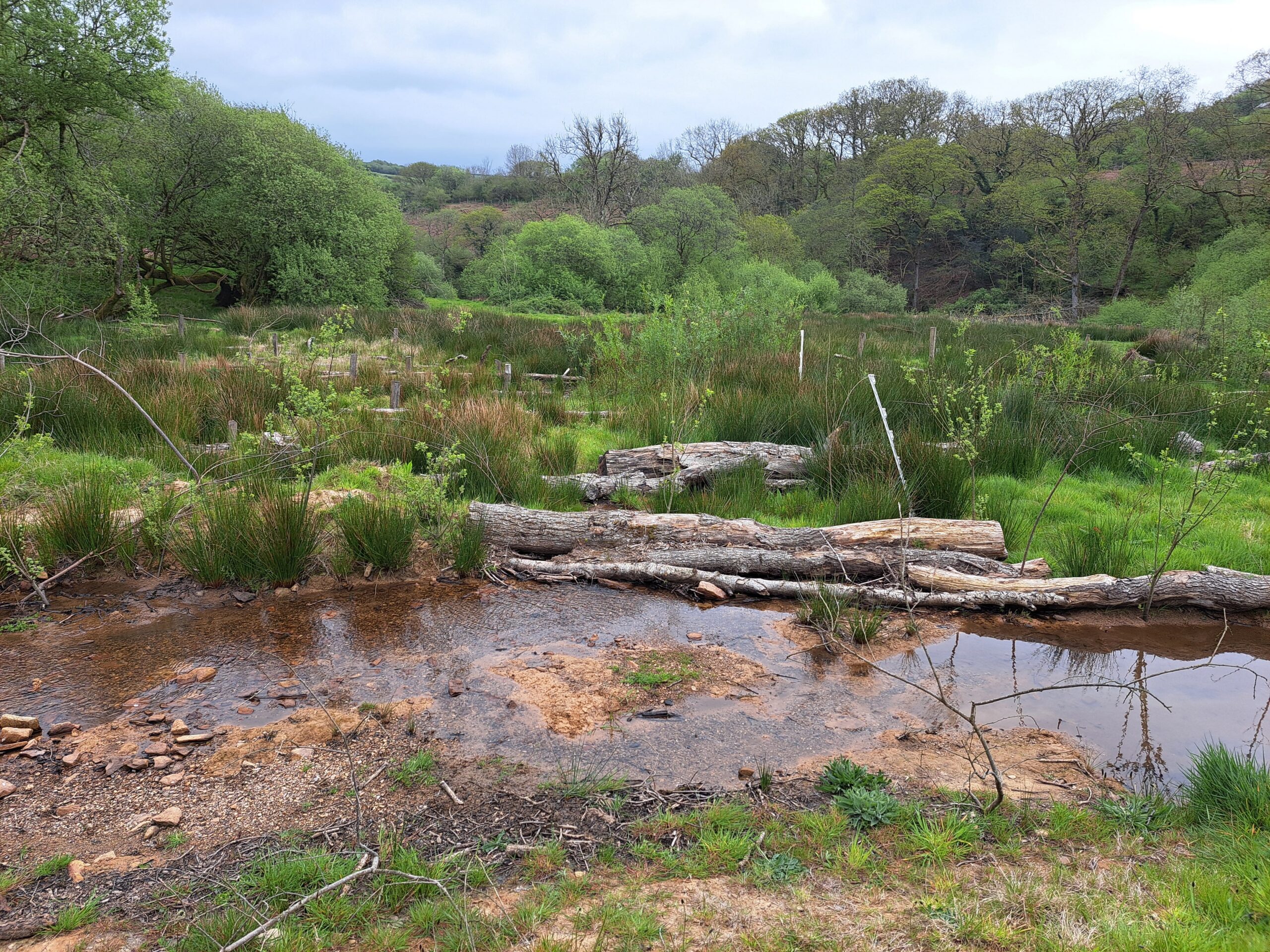
Working alongside the National Trust, we undertook optioneering, feasibility, design, and facilitated the delivery as part of a rewetting of the landscape at Tattiscombe in North Devon. Different techniques and nature-based solutions (NbS) were used to slow flows and disperse water across hillslopes to restore valley wetland habitat, whilst improving channel-to-floodplain connectivity on the valley floor. This project is seeing wetland species flourish, flows attenuated, and sediment transport processes triggered, to create new riverbed habitat. All of which are contributing to a healthier, more resilient landscape.
- Client National Trust
- Location Tattiscombe, North Devon
- Partners FiveRivers
- Services
Characterising the landscape to inform intervention
Tattiscombe sits within a steep-sided, rural river valley in Exmoor National Park. Two streams converge and flow through Tattiscombe, before joining the River Heddon and flowing out into the Bristol Channel. The landscape, like many UK catchments, has been shaped by intensive land and water management. Over time, this has degraded the river course, floodplain, and hillslope habitats. Working in collaboration with the National Trust, our initial involvement started at the optioneering and concept design stage.
The National Trust's vision for the site involved restoring wetland habitats and slowing flows as part of a wider Riverlands Project. To achieve this, the first step was to understand the geomorphological and hydrological characteristics and conditions. This enabled us to predict how the system would respond to any interventions proposed.

Evidence-led design
It became evident through our investigations that weirs and channel realignment had contributed to bed incision, resulting in over-deepened channels, poorly connected to their floodplain and hillslopes during high flows, in turn impacting terrestrial habitat.
Our design sought to reduce the impact of these pressures, kickstarting the natural processes to restore and enhance the habitat. Following the initial investigations and optioneering, we developed our concept proposal into a detailed design, led by the geomorphology assessment, supported by hydraulic modelling using a 2D HEC-RAS model built for Tattiscombe. Engineering collaboration provided the essential ‘how to’ and facilitated the development of design drawings, enabling the client to share plans with contractors to price the works and produce a construction methodology.
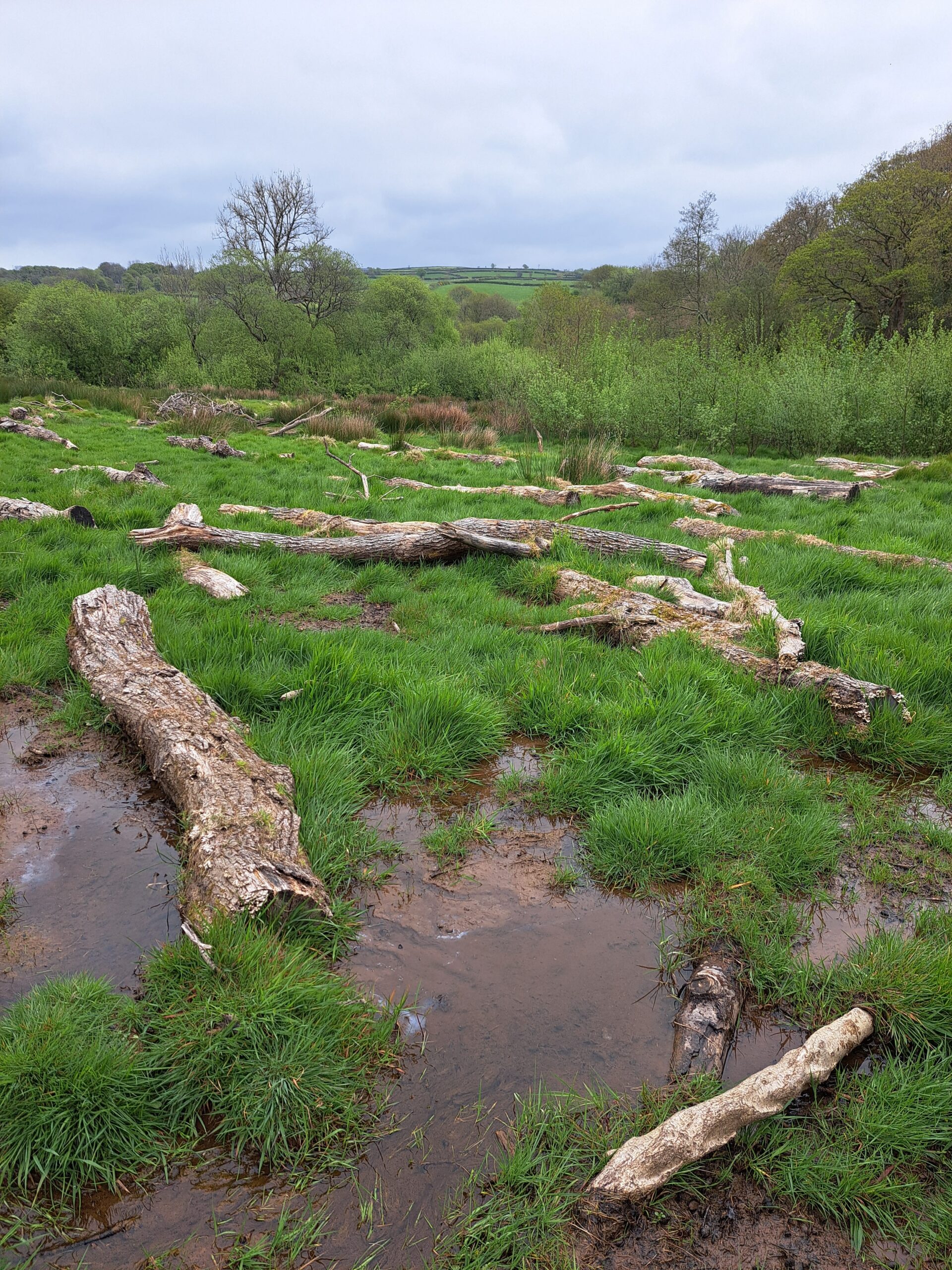
The works began in summer 2024, with on-the-ground work overseen by our geomorphologists. The works were completed by early 2025. The works undertaken involved infilling the existing stream and cutting through artificially high ground at the top of the hill, aiding in the dispersal of water across the hillslope, where it now feeds wetland habitat. Large wood was placed across the hillslope to provide additional habitat, whilst also helping to manage high velocities that could occur following heavy rainfall.
On a recent visit to the site in 2026, biofilms were visible in areas of ponded water, a sign that the hyporheic zone is already recovering and supporting biota.
Supporting natural geomorphic recovery
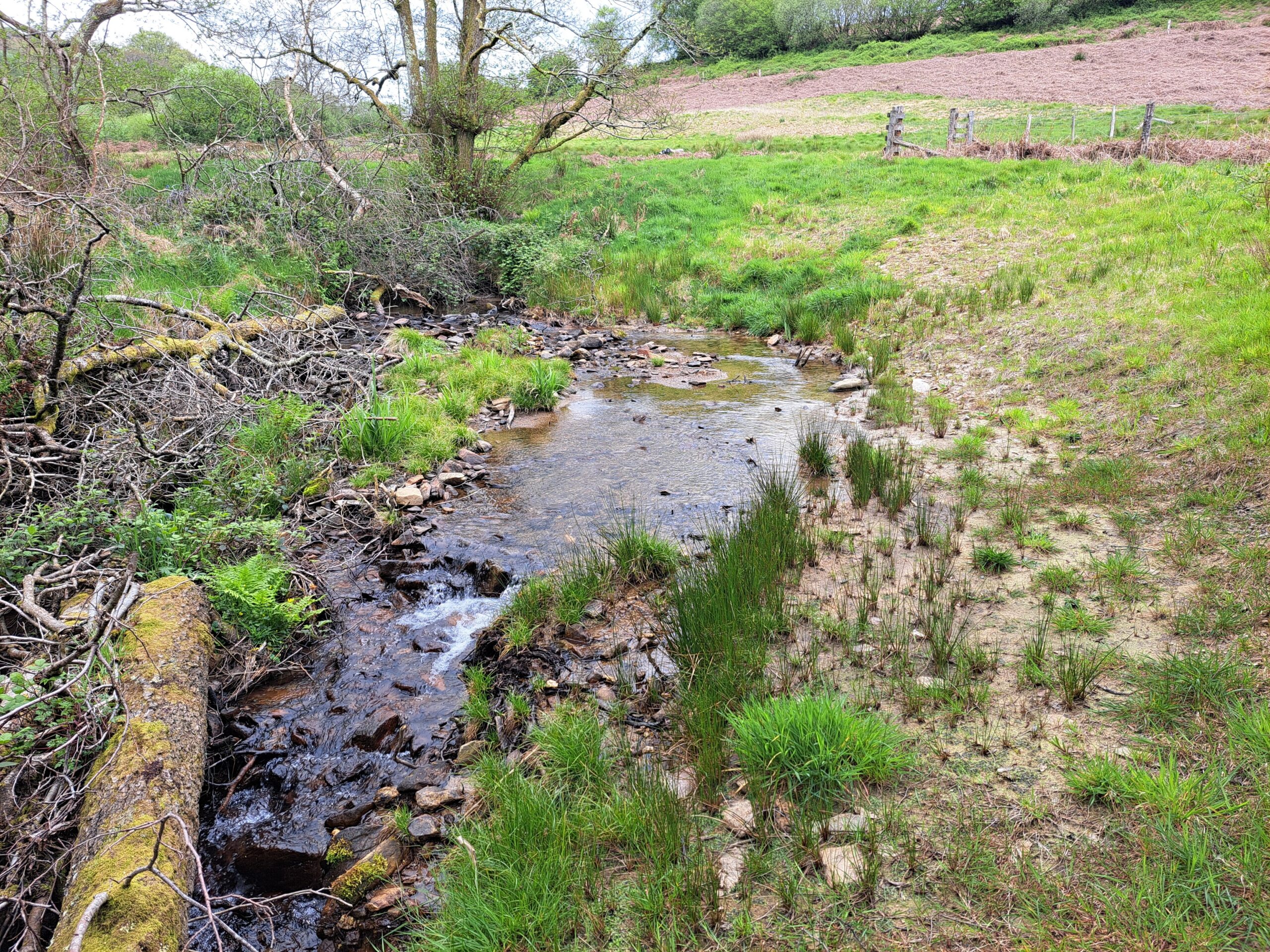
Further work was undertaken at the base of the valley, where high ground was excavated and lowered alongside the river channel to restore space for flood flows. This was done in targeted areas to keep excavation to a manageable and sustainable level.
In winter 2025, a flood event with an estimated 10% AEP (Annual Exceedance Probability) delivered flows and fresh gravel. Deposition, encouraged by the woody material the National Trust had hinged into the river throughout the reach, has helped raise the bed and transform this section into a mini-anastomosed channel, producing diverse flow biotopes and habitats.
Growing a resilient future
We are already seeing that the restoration works at Tattiscombe are enabling natural processes and creating the space needed to diversify the river channel, riparian, and floodplain morphology, supporting more varied habitats.
Science will soon reveal the impact the scheme is having on catchment hydrology, thanks to investigations being undertaken by Exeter University.
Projects such as Tattiscombe demonstrate how collaborative river restoration is crucial to meeting our climate resilience goals.